
In brief
In a monumental display of military power, China's recent parade highlighted the nation's advancements in weaponry and the political alliances forming in opposition to Western dominance. Leaders Xi Jinping, Vladimir Putin, and Kim Jong Un were seen together for the first time, signaling a shift in global power dynamics that could have lasting repercussions. Analysts argue that this event marks a bold assertion of China's ambitions on the world stage, particularly as tensions with the US escalate.
The gathering of Chinese leader Xi Jinping, Russian President Vladimir Putin, and North Korean leader Kim Jong Un for a military parade in Beijing represents a significant political move on the global stage. This marks the first public appearance of these leaders together, showcasing their alliance amidst a backdrop of geopolitical tension.
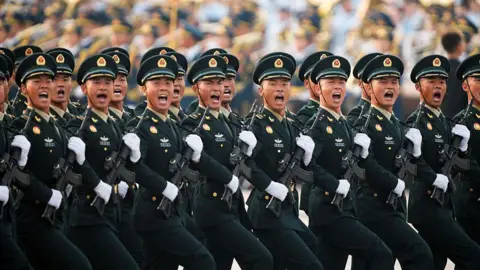
The parade commemorated the 80th anniversary of Japan's surrender in World War II, unveiling advanced military capabilities such as new hypersonic weapons, a nuclear intercontinental ballistic missile, and autonomous drones. This display is not merely about military strength but is also a strategic message aimed at Western powers, particularly the United States.
Experts suggest that China's assertiveness under Xi Jinping is becoming increasingly evident, especially as the country positions itself as a counterbalance to US influence. Given the shifting landscape of international relations, the collaboration of these authoritarian regimes raises critical questions about the future of global governance.
The leaders' public unity appears to send a message to the West, suggesting an alternative to the US-led global order. As Xi Jinping portrays himself as a global leader, the implications of this alliance are profound. It indicates a shifting dynamic in which the balance of power is tilting away from democratic nations towards more authoritarian governance models.
Analysts assert that the emerging world order characterized by such alliances may be a direct consequence of recent US policies that have alienated traditional allies. With India's recent rapprochement with China amid American tariffs, the stakes for the West have never been higher.
The response from Trump's administration has already been notable, with Trump labeling the collaboration as a conspiracy against American interests. This reaction emphasizes the intensity of international relations dynamics that are evolving rapidly.


