In brief
In a closed‑door session, the UN Security Council carried out its eighth informal straw poll to select the next Secretary‑General. Rebeca Grynspan of Costa Rica led the unofficial tally, while several other prominent former officials also contested the race. The poll’s results are confidential, and the selected candidate will be recommended to the General Assembly for appointment on 1 January 2027.
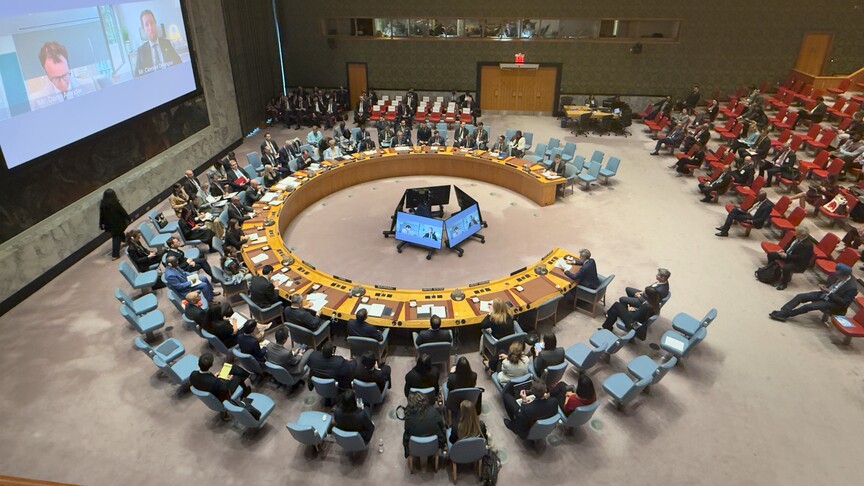
In a closed‑door session on Thursday, the United Nations Security Council conducted its eighth informal straw poll to decide the next Secretary‑General, concluding with Costa Rican former vice‑president Rebeca Grynspan emerging as the unofficial front‑runner.
How the Straw Poll Operates
Straw polls in the Security Council are informal, behind‑the‑scenes ballots that gauge the viability of candidates when the council is not formally voting. Each member state receives a ballot for each nominated candidate, rolling three possible stances: "encouraged," "discouraged," or "no opinion expressed." A nominee must secure at least nine encouraged votes while receiving no discouraged votes from any of the five permanent members to be considered viable.
Although the security council uses color‑coded ballots to differentiate permanent and non‑permanent members in earlier rounds, the eighth poll reverted to undifferentiated ballots following the entry of new candidates. The council has intentionally kept the results of these votes confidential, meaning that no official tally is published and only the nominees are notified of the outcome.
Who Participated in the Vote
The poll included a senior cohort of former government and diplomatic leaders. Rebeca Grynspan of Costa Rica, a former vice‑president and minister in her country, is the front‑runner according to Xinhua. Other contenders comprise former Ecuadorian ambassador Ivonne A‑Baki, former Ecuadorian minister and ex‑UN General Assembly president Maria Fernanda Espinosa, Argentinian IAEA director Rafael Grossi, former United Arab Emirates foreign minister and UN ambassador Lana Nusseibeh, and Turkish former foreign minister Feridun Hadi Sinirlioglu, who now serves as secretary general of the OSCE.
The Vote in Action
"The eighth round of straw polls has taken place," said Sanita Pavluta‑Deslandes, the Latvian ambassador who chaired the session.
After the secret vote concluded, Pavluta‑Deslandes informed reporters that each candidate would receive a copy of the poll’s results through their respective permanent‑representatives. She also notified the current President of the UN General Assembly that the poll had been conducted.
Implications for Global Governance
The selection of a new Secretary‑General carries significant civic stakes. As the UN's chief administrative officer, the next Secretary‑General will shape responses to global crises, steer multilateral climate negotiations, and frame the organization’s role in conflict resolution. The composition of the council’s recommendation therefore reflects not only geopolitical bargaining but also the priorities of a diverse international community that relies on the UN to address shared challenges.
The list of candidates—many of whom have served in high‑profile diplomatic roles—underscores the Council’s preference for seasoned practitioners who have navigated both national and international arenas. Citizens worldwide will feel the ripple effects of the Secretary‑General’s policy choices, especially in areas such as humanitarian aid, security cooperation, and sustainable development.
Next Steps and Timing
Following the straw poll, the council will formally recommend the chosen candidate to the General Assembly, where the nominee must secure a two‑thirds majority to attain the office. The selected Secretary‑General will assume duties on 1 January 2027, marking the end of Antonio Guterres’ term.
While the council’s informal process remains opaque, its influence on the eventual appointment is well understood. Member states, UN agencies, and the global public all anticipate that the incoming Secretary‑General will bring a balanced perspective to the organization, steered by the collective choice of the Security Council’s diverse membership.
In an era marked by rapid geopolitical change, the UN's leadership selection process reflects the broader democratic principles at the core of international governance—yet the secrecy of the polls also highlights the complexities of maintaining transparency in global institutions. Citizens and civil society groups across the world will continue to monitor the next official announcement, as the Secretary‑General’s agenda will set the tone for the UN’s most pressing initiatives in the coming decade.