In brief
The U.S. Central Command reported that an aircraft disabled the M/V Huda in the Gulf of Oman after the vessel ignored warnings to remain within Iranian waters. The action is part of a broader U.S. effort to enforce a blockade on Iranian maritime activity, following earlier strikes on Iranian‑linked ships. The incident highlights the ongoing tension between U.S. enforcement of sanctions and Iranian shipping interests, with implications for international maritime commerce and civilian crew safety.
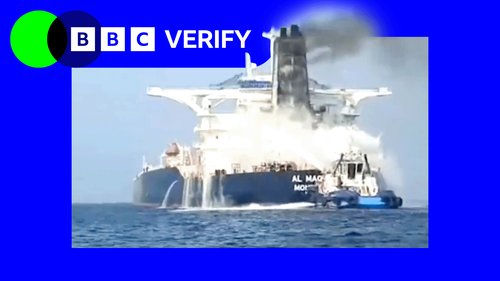
U.S. Central Command (CENTCOM) announced that a U.S. aircraft fired precision munitions at the stern of the Saint Kitts and Nevis‑flagged cargo ship M/V Huda in the Gulf of Oman on Saturday, disabling the vessel after its crew was instructed to abandon targeted spaces. The incident occurred while the ship was attempting to depart Iranian territorial waters, after visiting an Iranian port, and after repeatedly ignoring a U.S. naval blockade imposed on Iran.
The crew had ignored warnings and attempted to breach the blockade on several occasions, prompting the U.S. response.
According to CENTCOM, the munitions disabled the ship’s stern, forcing the crew to abandon the vessel. The strike was described as part of a broader U.S. effort to restrict Iranian maritime activity, following the destruction of other Iranian‑linked ships.
Since July, U.S. forces have redirected 147 commercial vessels and disabled five merchant ships that refused to comply with the blockade. CENTCOM added that it had previously destroyed 10 Iranian commercial oil tankers, which it says were part of a multibillion‑dollar “shadow network” operated by Iran’s Islamic Revolutionary Guard Corps (IRGC).
International maritime implications
The disabling of the M/V Huda illustrates the U.S. commitment to upholding its sanctions regime against Iran, and the enforcement of a naval blockade in the Gulf of Oman. The action also reflects the strategic effort to limit Iran’s ability to move cargo through maritime routes that are vital for global trade. The incident underscores the potential friction in U.S.-Iran maritime relations and the broader geopolitical stakes in the region.
Civic considerations and accountability
For the civilian crew of the M/V Huda, the incident posed an immediate safety risk and potential loss of livelihood as they were forced to abandon the vessel. While no casualties were reported, the event highlights the civil impact of military enforcement of international sanctions. The decision to strike the ship ultimately comes from U.S. naval leadership and policy makers, and raises questions about the oversight and legal framework that permits such operations.
From the perspective of global commerce, the disabling of any commercial vessel can reverberate through shipping costs, insurance premiums, and supply chain reliability. The U.S. action represents a balancing act between national security interests and the maintenance of open, lawful navigation for neutral commercial shipping. The incident prompts ongoing discussion about the limits of military power in enforcing international sanctions, and the mechanisms by which such actions are monitored for transparency and legality.
Reports from multiple sources, including a statement from CENTCOM and a Xinhua article, confirm the details of the deactivation. The coordinated enforcement measures reflect a continued U.S. strategy to deter Iran’s maritime operations and limit its economic network. The incident adds another chapter to the evolving dynamics between U.S. maritime enforcement and Iranian shipping activity in the Gulf of Oman.