
In brief
At the fifth meeting of its Advisory Committee for Higher Education and Future Skills, the UAE Ministry of Higher Education and Scientific Research showcased advances in AI deployment, data governance, and entrepreneurship education. Officials emphasized translating partnerships into tangible outcomes that equip graduates with future‑ready skills and strengthen the nation’s knowledge‑based economy. The committee, led by Minister Dr. Abdulrahman Al Awar, aims to create a sustained dialogue between academia, government, and industry to shape national priorities.
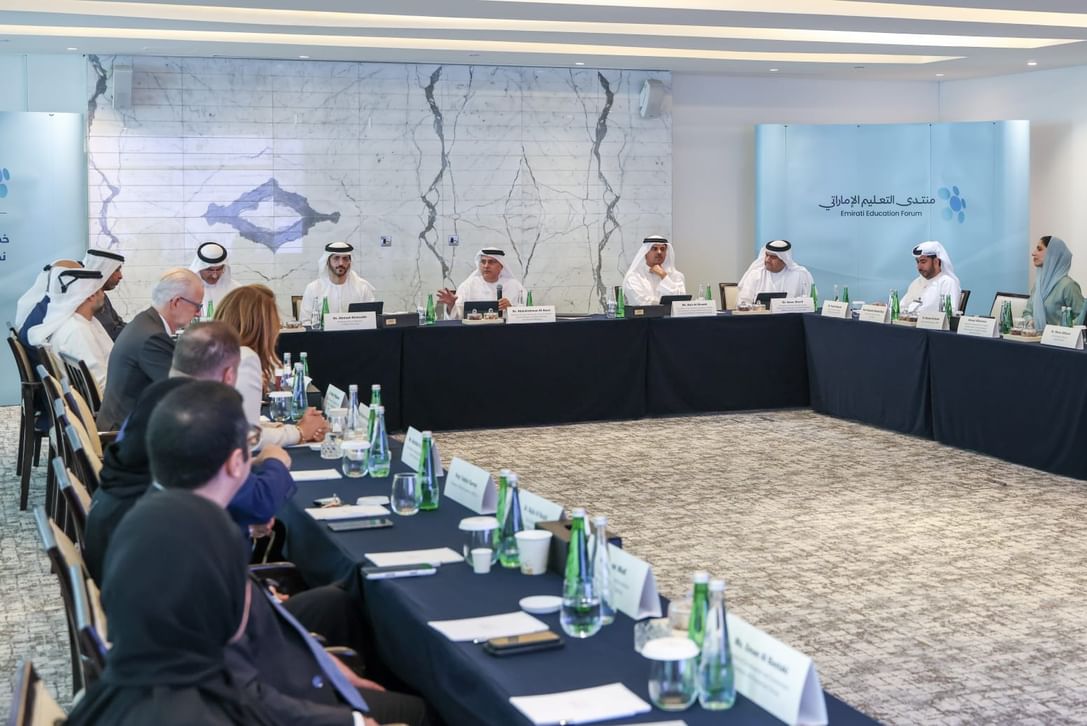
On 1 November 2026, the fifth meeting of the UAE Ministry of Higher Education and Scientific Research’s Advisory Committee for Higher Education and Future Skills convened in Abu Dhabi on the sidelines of the Emirati Education Forum. The gathering brought together members of the committee, heads of working groups from universities and key economic sectors across the United Arab Emirates, and senior MoHESR officials, all focused on translating strategic plans into concrete outcomes for the country’s higher education system.
Chairing the session was Dr. Abdulrahman Al Awar, Minister of Human Resources and Emiratisation and Acting Minister of Higher Education and Scientific Research. In his opening remarks, Dr. Al Awar highlighted the committee’s progress, noting the alignment of its achievements with the vision of the Emirati leadership to produce generations capable of contributing to a knowledge‑based economy.
The achievements of the Advisory Committee and its working groups are aligned with the vision of our wise leadership, which places great emphasis on preparing generations capable of contributing to the knowledge economy. Collaboration between higher education institutions, government entities and private sector partners is essential to advancing shared national priorities.
The committee’s focus on artificial intelligence (AI) emerged as a central theme. MoHESR officials announced new initiatives that leverage AI to enhance data governance across universities, streamline administrative processes, and support research outcomes that align with national economic priorities.
In addition to AI, the meeting underscored the deepening of university‑industry collaboration. Working groups reported on expanded partnerships that place students in applied learning environments, provide co‑developed internship programmes, and embed industry experts into curriculum design. This strategy seeks to ensure that graduates possess practical, future‑ready skills that meet the evolving demands of the UAE’s dynamic job market.
Chief among the committee’s tangible results is the creation of new skill clusters. These clusters target emerging sectors such as renewable energy, data analytics, and advanced manufacturing, providing focused study tracks that merge rigorous academic theory with hands‑on industry experience. The introduction of these clusters aims to strengthen graduate readiness by aligning educational outcomes with employer needs.
Entrepreneurship education also received a considerable boost. Through strengthened programmes, universities now offer more interdisciplinary courses, incubator support, and exposure to venture funding opportunities. The committee’s intent, as stated by MoHESR senior officials, is to foster a culture of innovation that allows graduates to launch their own ventures and contribute to the nation’s creative economy.
Dr. Al Awar emphasized the importance of sustained dialogue, pointing out that the Advisory Committee serves as a platform where academia, government, and private partners can continue to collaborate on national priorities. He stated that translating partnerships into tangible outcomes enhances education quality and increases higher education’s contribution to economic development.
We are building on the achievements made so far by strengthening institutional performance, accelerating the adoption of advanced technologies and expanding opportunities for applied learning, scientific research and entrepren
While the committee highlighted progress, it also acknowledged the need to accelerate the adoption of advanced technologies such as AI to keep pace with global trends. Continuous improvement of institutional performance was cited as a priority, with data governance reforms serving as a foundation for responsible, transparent research practices.
The meeting concluded with a reaffirmed commitment to building a knowledge‑based economy. The committee’s actions, including enhanced AI use, robust university‑industry alliances, and new skill clusters, are designed to strengthen the UAE’s competitive stance on the world stage. By ensuring that graduates are equipped with the right blend of knowledge, skills, and entrepreneurial mindset, the Ministry of Higher Education and Scientific Research signals its dedication to accountability, innovation, and inclusive growth across the nation.

