In brief
UNHCR’s latest report, unveiled ahead of COP31, shows that roughly 90 million displaced people are now living in countries increasingly exposed to climate hazards, with three‑quarters in Afghanistan and Bangladesh. Climate change is also complicating safe returns, as two‑thirds of refugee returns in 2026 left refugees in climate‑vulnerable nations. The agency calls for urgent climate‑financing for the most affected communities.
The United Nations High Commissioner for Refugees (UNHCR) released a new report on 6 November 2025 that warns nearly 90 million forcibly displaced people are now residing in countries that are becoming more exposed to climate‑related threats such as droughts, floods and extreme heat. The data, presented ahead of the 31st UN Climate Change Conference (COP31) in Antalya, Turkey, highlight a growing overlap of conflict, displacement and climate change, and call for increased climate‑adaptation funding for vulnerable communities.
The report, published from Geneva, notes that almost three‑quarters of the world’s forcibly displaced people live in countries such as Afghanistan and Bangladesh that are subjected to severe, climate‑related risks. This concentration of displaced populations in some of the world’s most exposed nations raises critical questions about survival, security and long‑term resilience.
Climate adaptation in fragile settings
The agency’s assistant high commissioner for operations, Anton Leis Garcia, emphasized that “climate adaptation in fragile and displacement‑affected areas is a matter of survival,” adding that “we need climate financing to reach the communities where the needs are greatest.” This statement underscores the UNHCR’s emphasis on targeted financial support for displacement hotspots where climate harm might be most catastrophic.
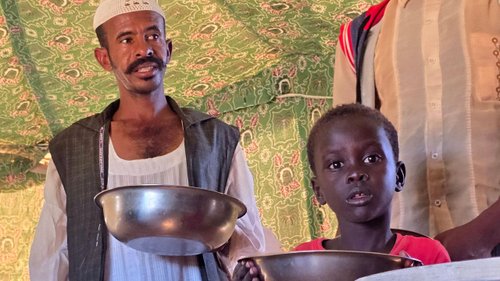
One of the report’s more intimate stories follows a Sudanese refugee who fled conflict in al‑Fashir in June 2023 to the Farchana settlement in eastern Chad. The woman said she sometimes does not find safe water for a week and must walk longer distances to reach alternative sources as seasonal riverbeds dry up amid rising temperatures. Her experience illustrates the everyday realities of many in refugee settlements that are increasingly torn by heat and drought.
Risk to returnees
Climate change is also turning the tide on safe returns. The report finds that in the first half of 2026, more than two‑thirds of refugee returns occurred in countries highly exposed to climate hazards, leaving resettled populations vulnerable to renewed displacement. In Syria, for instance, more than 4 million displaced people have recently returned, only to face worsening water scarcity, erratic rainfall and the threat of flooding along the Euphrates River, which damaged homes and displaced thousands in May.
Similarly, across sub‑Saharan Africa, an alarming projection indicates that one in three refugee settlements could experience at least 100 days of dangerous heat each year by 2050, complicating health and livelihood prospects. Ethiopian settlements such as Helaweyn may face dangerous heat conditions that threaten both infrastructure and community wellbeing.
Implications for institutions and public accountability
The overlapping crises outlined in the report place additional pressure on national and international institutions tasked with protecting displaced persons. Governments, humanitarian agencies and the political bodies that govern climate finance must now consider the double jeopardy faced by refugees in climate‑fragile regions. The report’s call for more robust climate‑adaptation funding demands greater transparency and accountability from donors and institutions charged with safeguarding displaced populations.
UNHCR’s findings also ripple through the global governance of climate finance. The agency urges that discussions at COP31 move beyond headline emissions targets and into concrete funding mechanisms that directly benefit the most exposed migration communities. Without such action, entire refugee cohorts face a future in which access to water, shelter and safety remain at the mercy of climate volatility.
Existing data from the UN highlights that the intersection of conflict, displacement and climate change is already a “real” risk for many populations, yet the financing needed to adapt remains insufficient. The report urges that donors—whether from national governments, development banks or private actors—prioritize risk‑based allocations that match the severity of climate exposure in displaced regions.
From an institutional perspective, the UN Secretary‑General’s office, regional bodies such as the African Union and the Organization of Islamic Cooperation, and national disaster risk reduction agencies will all need to coordinate closely. Their joint responsibility lies in developing cohesive policies that ensure displaced people are not left behind as climate events accelerate.
In addition, the legal frameworks that protect refugees—such as the 1951 Refugee Convention and its 1967 Protocol—must adapt to acknowledge that climate can be a push factor for relocation. The model of “climate refugees” remains absent from international law, and the report’s warnings may expedite the legal conversation that follows.
Ultimately, the UNHCR’s analysis underscores that the plight of nearly 90 million displaced people is no longer a humanitarian problem alone; it is a climate crisis that strains governance, legal frameworks and public resources. As the global community gathers at COP31 in Antalya, the agency’s data may serve as a catalyst for policy shifts that combine climate resilience with migration support, ensuring that displaced persons can rebuild and thrive in an increasingly unstable world.