In brief
A closer look at how the health issues of African presidents, including Cameroon's Paul Biya and Malawi's Lazarus Chakwera, are shrouded in secrecy, revealing the high-stakes game of maintaining power through the projection of strength.
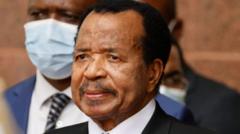
African leadership is often shrouded in secrecy, especially regarding health. Recently, rumors about the health of Cameroonian President Paul Biya, aged 91, and Malawian President Lazarus Chakwera have surfaced, leading to starkly different reactions that underscore a collective reluctance among African leaders to disclose their health conditions. Biya's administration has firmly rejected any claims of illness, publicly asserting his excellent health, while simultaneously prohibiting media discussions about the matter.Conversely, Chakwera addressed speculation about his health by showcasing strength through social media, posting videos of himself jogging and exercising. This tactic, according to Miles Tendi, an associate professor of African politics at Oxford University, reflects a broader expectation among leaders to embody resilience and vigor. “You can’t show weakness or vulnerability,” he notes—a sentiment that extends across political systems.Both leaders' varied responses suggest an underlying need to project strength, aiming to deter rival factions and opportunists. The way leaders choose to handle health rumors often intertwines with their political performance, reinforcing the notion that masculinity heavily influences political dynamics. Adebayo Adebajo, a professor at the University of Johannesburg, concurs, stating that African leaders’ health is often treated as a matter of state secrecy due to its potential economic and political implications.Historical cases in Africa provide context for this behavior, including the assassination of Congolese President Laurent-Désiré Kabila, which the authorities initially disguised as a medical trip. The reluctance to reveal health concerns can also stem from fears of succession crises, demonstrated by Malawi’s former President Bingu wa Mutharika, whose death was delayed in its announcement to avoid triggering succession uncertainty.The trend of secrecy surrounding political health in Africa is not unique to the continent. Many leaders globally maintain that their health status is private, reinforcing the idea that perception of strength is paramount. However, the expectation for transparency among leaders may be rising, especially among younger citizens advocating for accountability.In an age where public trust is paramount, the inability or unwillingness of leaders to communicate about health can breed skepticism and requires a cultural shift in perceiving health. Despite this, many still hesitate to break the established norms for fear of appearing weak. As political systems evolve in Africa, calls for leaders to be open about their health, especially from a tax-paying populace, may grow louder and more persistent.