
In brief
Homs, once the "capital of the revolution," is witnessing a poignant blend of sorrow and hope as its residents confront the traumas of the Syrian civil war while striving for a new beginning. Young survivors like Baraa express their aspirations amidst the remnants of their shattered city, highlighting stories of resilience and the communal desire to rebuild.
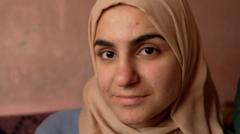
In the heart of Syria, Homs stands as a testament to both the horrors and the healing power of resilience. Nearly a decade after the outbreak of war that ravaged the city, its residents are now experiencing a revival of spirit and determination. Baraa, a young university student who once fled the destructive Old City as a child, reflects on the struggles her family endured and how they managed to survive amid the chaos. "Even now, I look back and wonder how we survived this nightmare," she confides, joined by her sisters, Ala and Jana.Their father, Farhan Abdul Ghani, shares the weight of his memories, recalling how he lost his wife in a rocket attack that struck their home. "We did not want war. We did not want a forever president," he asserts while beaming with pride for his daughters, who have now become beacons of hope for their community. Homs, once heralded as the "capital of the revolution," bore witness to peaceful protests in 2011 that spiraled into brutal conflict. Families like Baraa's were among many trapped in prolonged sieges, surviving under harrowing conditions where food was scarce and fear permeated daily life.The devastation left behind is stark, with Homs’ landscape punctuated by remnants of violence—scorched buildings and empty streets. Yet, juxtaposed with this pain is a newfound sense of optimism. "Everything is cheaper now," Farhan remarks, hopeful as markets are reviving due to fewer checkpoints and bribes. This small joy signifies a more substantial change for a city and country where 90% of the population lives in poverty.Despite the joy of new beginnings, the wounds from the past are still fresh. Dr. Hayan al-Abrash, who once operated an underground hospital, grapples with memories of the lost and the brutal violence of the regime. The echoes of the past linger heavily as he navigates the ruins of what once housed life-saving hope. "It's a time to build Syria for everyone, but we can't forgive those with blood on their hands," he passionately asserts.As the people of Homs gather to reclaim their city, the collective desire to rebuild emerges with a spirit of collaboration that transcends sectarian divides. Father Tony Homsy of the Catholic Church symbolizes this unity, expressing his belief that healing will take time but urges a forward-thinking mentality. "In this grotto which symbolizes refuge... there is also the story of this Muslim family," he reflects, highlighting the shared humanity of Homs' diverse population.Indeed, the streets of Homs are beginning to pulse with renewed energy and resilience. From the careful dreams of young students like Baraa to the steadfast commitments of community leaders, the hopes of its residents intertwine, poised to transform the narrative of their city from one of destruction to one of rebuilding and reconciliation. The scars of the past remain, yet, coupled with vibrant celebration and shared stories, Homs stands at the precipice of a hopeful future.


