In brief
As Los Angeles gears up for major global events, officials push for expanded bike lanes aimed at revolutionizing transportation in a city known for its car culture, but mixed public sentiment may hinder progress.
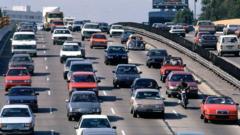
With its notorious freeways and car-centric lifestyle, Los Angeles has long embodied America's automobile culture. As the city prepares for the 2026 World Cup and the 2028 Olympic Games, questions loom about whether it can shift toward more sustainable transportation, particularly cycling. Advocates argue that the city's almost year-round sunny climate makes it a prime candidate for bike-friendly infrastructure, but it faces significant resistance from a populace accustomed to driving.Despite the vast expanse of LA, which sprawls across 460 square miles, only 7% of residents currently use public transportation to commute to work, and just 1% utilizes bicycles. This is concerning, especially with hundreds of thousands of visitors expected for the upcoming sporting events. The city adopted the "Twenty-eight by '28" transportation initiative in 2017, aimed at increasing transit options, including new bike lanes. However, many are questioning whether these changes will be embraced or resisted by the car-loving community.Damian Kevitt, executive director of Streets Are For Everyone, emphasizes the necessity of safer biking conditions for locals. After losing his leg to a careless driver, he sees the new bike lanes as a critical step toward making cycling a feasible option for more Angelenos. Residents showed support for this vision when they voted for a measure mandating the construction of more bike lanes and pedestrian-friendly spaces.Yet not everyone is on board. Critics, like Forest Lawn Cemetery's CEO Darin Drabing, argue that bike lanes worsen vehicular traffic and lead to frustration among drivers. He doubts the efficacy of bike lanes, pointing to cases where their introduction has led to increased congestion elsewhere. Furthermore, recent debates in cities like Toronto reveal that cycling infrastructure can be a polarizing topic, leading to lawsuits as advocates push against removals.The clash between cycling advocates and car enthusiasts is evident on the busy streets of Los Angeles. While some residents, like Mimi Holt, are finding new enthusiasm for cycling, many others remain fearful of busy, fast-moving traffic. Holt, who stopped biking for two decades due to safety concerns, hopes for interconnected lanes to make cycling more appealing and practical.Los Angeles Mayor Karen Bass has expressed commitment to achieving a “transit-first” mindset for the upcoming Olympic Games. She champions a vision of a connected network of bike paths, aided by a recent $900 million federal grant for rail improvements. However, with only a fraction of the proposed projects completed thus far, advocates worry that the pace of change is too sluggish.Even as the city prepares to reach out for additional federal funding, some residents cast doubt on the feasibility of a city-wide transportation revolution within the next few years. Longtime Angelenos, accustomed to a car-centric lifestyle, express skepticism over the possibility of transitioning to a bike-friendly metropolis in such a vast and sprawling city.As consensus among residents remains divided, it remains to be seen whether Los Angeles can truly reshape its urban landscape for cycling in time for major global events and beyond. Mayor Bass remains optimistic, believing that the city can achieve lasting transformations through ongoing transit reforms, creating a future that may surprise skeptics and advocates alike.