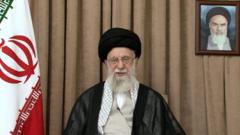
Iran's supreme leader, Ayatollah Ali Khamenei, made a public address after the recent US strikes on his country's nuclear facilities, branding US actions as ineffective. In his remarks, he insisted that the US gained nothing significant from these military operations and described the strikes as a failure. This announcement came soon after the US government touted a successful operation aimed at crippling Iran's nuclear capabilities.
During a Pentagon press conference, US Defense Secretary Pete Hegseth spoke of a "historic success," asserting the strikes had rendered crucial Iranian enrichment facilities inoperable. President Donald Trump supported these claims, stating that the strikes "obliterated" essential nuclear sites. However, Khamenei refuted these assertions, declaring the US strikes did not accomplish their objectives and taunting that the US would face severe repercussions if it launched future attacks.
Significantly, the leader mentioned the retaliation against a US air base in Qatar during recent hostilities, asserting it served as a warning of potential future actions against US interests in the region. In the wake of the Israeli-Iranian confrontations that escalated on June 13, Khamenei remained out of public sight until his recent televised address, likely due to concerns for his safety as conflict intensified.
Amid ongoing tensions, Iranian authorities have contemplated abandoning cooperation with the International Atomic Energy Agency (IAEA), amidst accusations related to non-proliferation commitments. Notably, Khamenei asserted that Iran's nuclear agenda is purely geared toward peaceful purposes. The recent airstrikes and ensuing altercations resulted in significant casualties, with reports indicating numerous fatalities on both sides.
As the political landscape in the Middle East shifts rapidly, it remains to be seen how this ongoing power struggle will evolve, especially as both nations prepare for potential further confrontations in a region marked by strategic instability.