In brief
Student protests that began demanding lower education costs have erupted into violent clashes that now involve masked demonstrators throwing stones and police using water cannons and tear gas. The unrest, involving the historic Flamingo movement, has spread beyond Tirana and seen attacks on government buildings. Prime Minister Edi Rama has blamed opposition leader Sali Berisha and foreign forces while refusing to resign, sparking a sharp political showdown. Calls for a halt to demonstrations come amid growing anxiety over Albania’s EU accession hopes and the country’s tourism reputation.
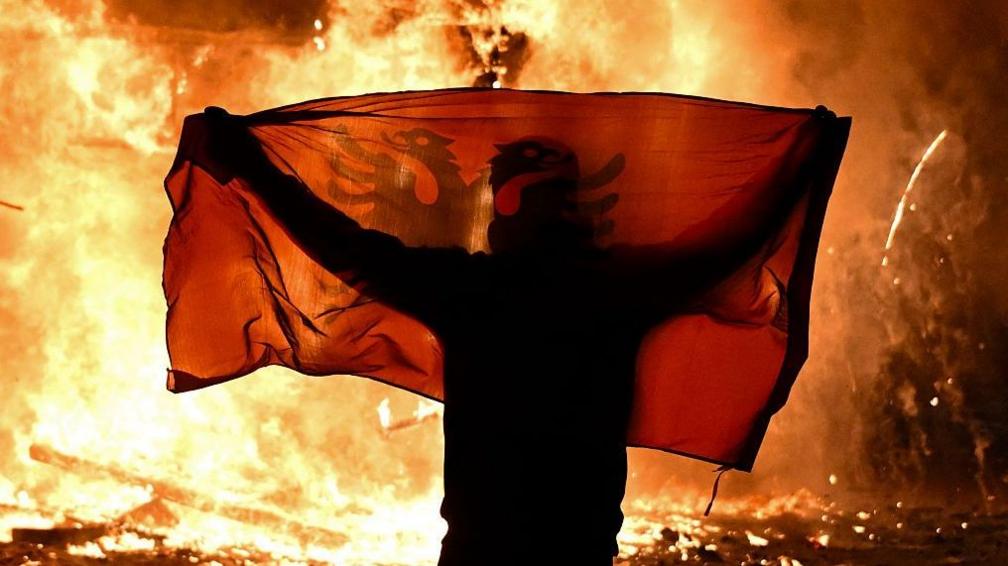
A student strike that had marched through Tirana’s streets for months to demand lower education fees has now turned violent, with masked demonstrators hurling stones at riot police and government buildings taking fire. The clashes have spilled over to the cities of Durrës, Shkodër, Korçë and Vlora, where police have deployed water cannons, tear gas and batons to quell the protests.
The current wave of demonstrations is linked to the long‑running Flamingo movement that began in early summer. Protesters drew on the symbol of a pink flamingo, calling for Prime Minister Edi Rama to step down and highlighting corruption in the government. Despite the Flamingo slogan “Rama in jail, Berisha in jail,” the movement has kept a separate identity from the opposition.
In the week of the violent escalation, students and secondary‑school staff joined the ranks, swelling the crowds. Reports of a young protester with a broken leg in agony and a floor of the education ministry set on fire have further inflamed tensions. Meanwhile, the government blamed opposition leader Sali Berisha for instigating the unrest and accused foreign powers—particularly from Serbia—of meddling in Albanian politics.
Prime Minister Edi Rama has rejected calls for his resignation, pledging to “listen, address legitimate concerns and keep Albania moving forward,” but the violent scenes have raised serious questions about the stability of the country, as it seeks deeper ties to the European Union. The European Union has urged caution and said the unrest could jeopardise Albania’s EU accession path.
For tourists and visitors, safety remains a concern. The UK government urges travelers to monitor the latest news, avoid large gatherings and follow local authorities’ instructions. While the violence has thus far been contained in certain districts, the situation remains unpredictable, and authorities warn that any fresh flare‑ups could cast a shadow on Albania’s popular tourist image.
Travel advice and reliable information can be found on the government website here. Pending developments will continue to shape the political and security landscape in Albania as the country navigates its next steps towards European integration.