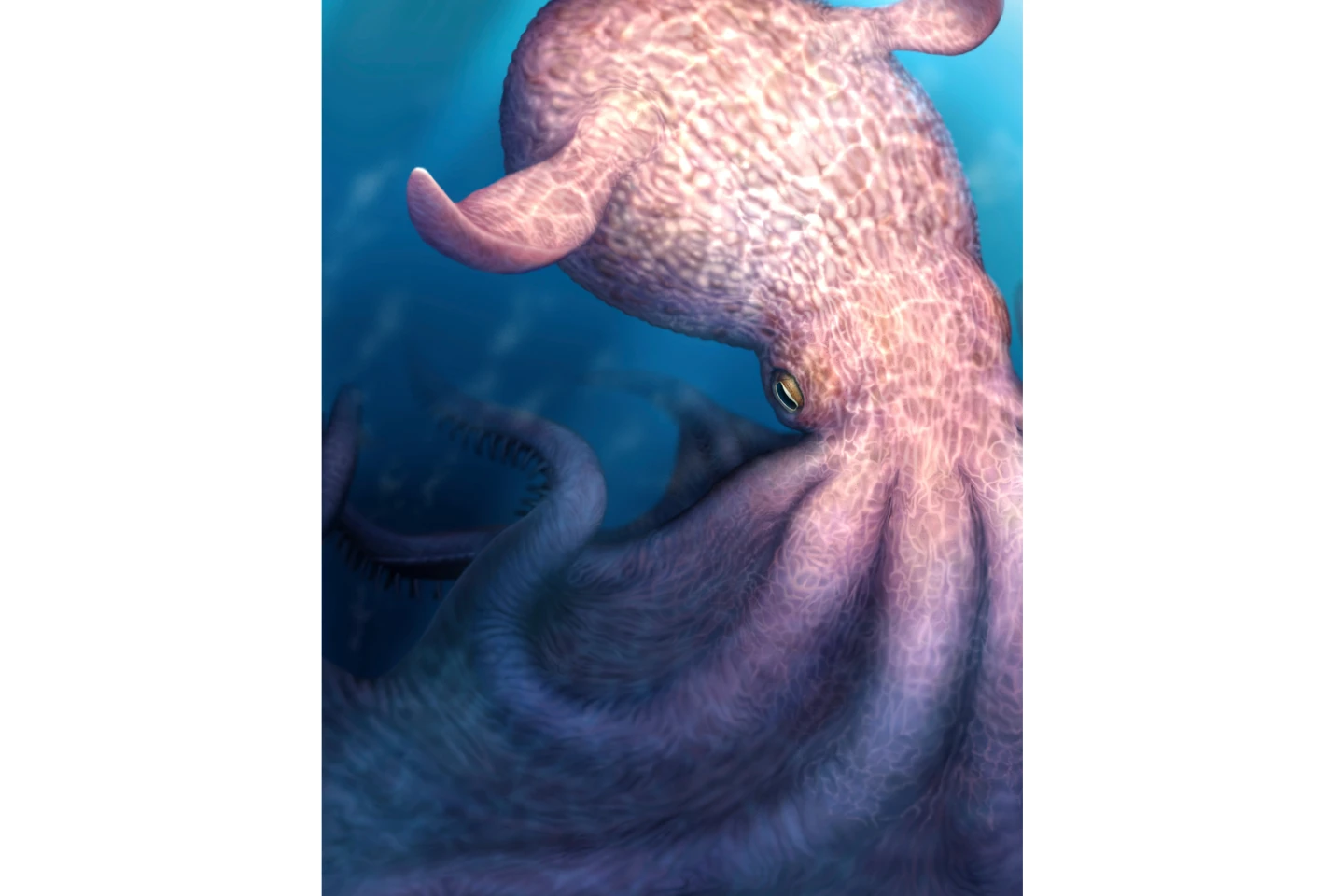
NEW YORK (AP) — Ancient octopuses may have been the unseen titans prowling the oceans during the age of dinosaurs, according to new analyses of fossilized jaws. These formidable predators, resembling the legendary kraken, were likely to have reached lengths of over 60 feet (18 meters), potentially rivaling the well-documented marine reptiles of that era, such as mosasaurs and plesiosaurs.
Researchers studied the jaws from ancient octopus fossils discovered in Japan and on Canada's Vancouver Island, as well as additional specimens sourced via a novel method dubbed 'digital fossil mining.' This technique allows for intricate cross-sectional scanning of rocks to expose otherwise hidden fossils.
Previous studies have largely overlooked octopuses in discussions of ancient marine ecosystems due to their soft bodies, which tend to preserve poorly. Nonetheless, this study highlights their solid beaks made from chitin, capable of crushing shells and bones, indicating their potential role as apex predators.
“These krakens must have been a fearsome sight to behold,” remarked paleontologist Adiel Klompmaker from the University of Alabama, who wasn’t directly involved in the study.
The research reveals that the examined ancient octopuses potentially stretched from 23 to 62 feet in size, with the largest jaw distinctly outmatching any modern species. Co-author Yasuhiro Iba from Hokkaido University pointed out significant wear on these jaws, implying they hunted hard-shelled prey frequently.
Despite these findings, the exact dietary habits of these prehistoric octopuses remain speculative, as their stomach contents have not been preserved. Future searches for additional octopus fossils may yield more insights into their position within ancient marine food chains.
Neil Landman from the American Museum of Natural History, who was not part of this research, echoed the sentiment that there are numerous potential fossil sites yet to be explored, each offering valuable perspectives on the evolution of marine ecosystems over time.
These findings were published Thursday in the journal Science, opening new debates about the nature of predation in ancient oceans.