When Stephen Scheeler became Facebook's Australia chief in the early 2010s, he was a true believer in the power of the internet and social media for public good.
It would herald a new era of global connection and democratise learning. It would let users build their own public squares without the traditional gatekeepers.
However, doubt has since enveloped the optimism surrounding social media. By the time Scheeler left Facebook in 2017, concerns over the platforms' negative impacts, particularly on young users, began to crystallize.
With teenagers now viewed as a lucrative market, various governments worldwide, including in Canada and parts of Europe, have experimented with limiting children's access to social media. Yet, Australia is poised to take the most radical step by instituting a ban for users under 16.
This sweeping measure requires social media companies to take 'reasonable steps' to prevent underage users from accessing their platforms, leading to vociferous protests from the tech industry.
Critics of the law, such as Paul Taske from NetChoice, argue that it constitutes blanket censorship that may make children feel less informed and connected. Moreover, there’s apprehension that Australia's approach may set a precedent for other nations to follow.
As the law unfolds, major players like Meta, TikTok, and Snapchat have loudly opposed it, suggesting it might impede on children's rights and worsen their safety online.
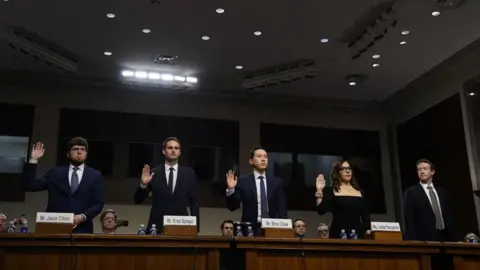
Whistleblower revelations and ongoing lawsuits have also kept social media firms under intense scrutiny, as they stand accused of prioritizing profits over user safety. The upcoming trials in the U.S. will explore allegations of these companies crafting addictive platforms while understating associated harms.
Meanwhile, amidst the impending legislation, tech companies have hurriedly introduced 'safer' versions of their platforms aimed at younger users, yet experts remain skeptical of their effectiveness.
Australian officials, led by Communications Minister Anika Wells, stand firm on the necessity of strong regulation to protect children from the detrimental effects of social media, stating that tech firms have had ample time to self-regulate.
The ramifications of Australia's decision, set against a backdrop of growing global concern about social media's impact on youth, could usher in a new phase of tech regulation, and it remains to be seen how effective this approach will truly be.