In brief
China’s recent typhoon toll has been accompanied by a wave of AI‑made fake videos that spread panic and confusion online. Authorities have launched arrest campaigns and new mandates to label AI content, while experts warn that detection is still lagging behind creation. Meanwhile, the nation’s ambitions for AI dominance clash with rising public distrust over inaccurate reporting, prompting calls for stricter regulation and broader media literacy. The debate highlights how misinformation can grow faster than the legal frameworks designed to control it.
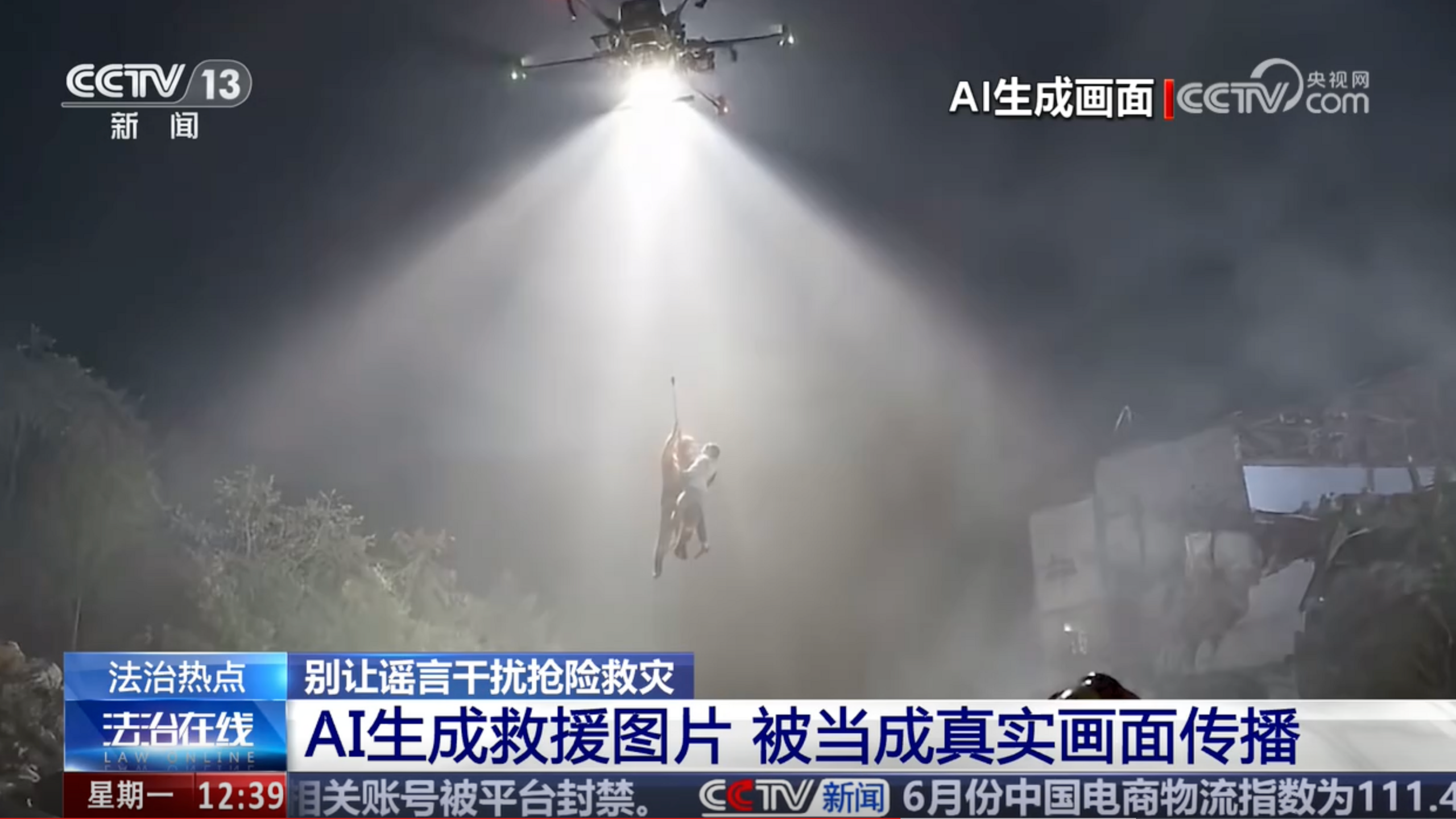
After Typhoon Noul struck China’s coast, emergency authorities warned of another, unexpected hazard: a flood of AI‑generated videos. These clips exaggerate scenes from the storm, misrepresent disaster footage and, in some cases, fabricate entire rescue operations.
The Spread of Fake Content
From images of bodies bobbing in flood water to staged rescue of pigs over people, the density of misinformation has surged. Virtual “power outages” claimed in videos often prompted residents to panic‑buy supplies, and some depictions of animals escaped during floods were completely fabricated.
Government Response
China’s police have begun arresting content‑creators, with penalties ranging from fines to seven years in prison for the most egregious cases. The Cyberspace Administration announced a nationwide crackdown, ordering cyber‑police to track fake news, staged footage, and impersonations of officials. Platforms are now urged to review, verify and remove suspicious content before it spreads.
Officials say AI has lowered the technical bar for producing misinformation: anyone can prompt a model to generate realistic text, images, audio and video. Consequently, a call for compulsory AI‑source stamps has been made, though some experts fear the stamps themselves might be edited away.
Expert Perspectives
Professor Chen Bin notes the “high realism” but “total fabrication” of AI content, warning that it fuels panic when disasters hit. Professor Gao Fuping stresses that motivations range from self‑promotion to deliberate social unrest, with many believing the online world is untraceable.
Legal scholar Peter Pang argues that AI apps and publishing platforms should face greater accountability. He cites cases where platform services enable the spread of misleading videos, making them complicit in any harm caused by resulting panic.
Implications for Public Trust
China’s rapid AI investment—over 6,000 companies, a “main driving force” of national strategy—coincides with a growing trust vacuum. Past incidents of under‑reporting death counts during disasters have emboldened bad actors, while the public’s reliance on unverified sources fuels misinformation cycles.
Some officials advocate for a “trusted information infrastructure” that provides early warnings and verified disaster updates to journalists. However, the speed with which AI‑generated rumors spread—often faster than detection tools—means that pre‑emptive regulation is essential.
For more on the intersection of technology and public safety, see our series on Typhoon‑induced floods and rare tornadoes in China.