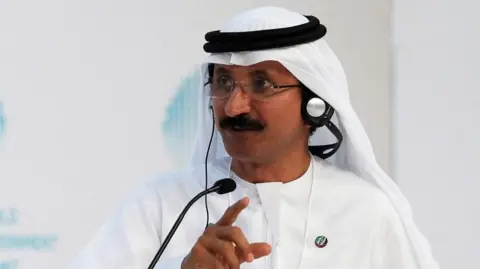
The head of global ports operator DP World has left the company after mounting pressure over his links to convicted sex offender Jeffrey Epstein.
Sultan Ahmed bin Sulayem's exit as chairman and chief executive comes after newly-released files showed the Emirati mogul appears to have exchanged hundreds of emails with Epstein over a decade.
Being mentioned in the files is not a sign of any wrongdoing, and the BBC has approached Sulayem for a comment.
DP World announced his resignation, effective immediately, on Friday, naming Essa Kazim as chairman and Yuvraj Narayan as chief executive. A photograph of Sulayem appeared to have been removed from its website.
DP World, the Dubai-owned logistics giant that runs port terminals across six continents and plays a significant role in global trade infrastructure, has come under increasing pressure over recent days from businesses it works with.
Earlier this week, the UK development finance agency and Canada's second largest pension fund La Caisse said they were suspending new investment into the firm.
And the Prince of Wales' Earthshot project, which received funding from DP World, was reported to the UK Charity Commission after Sulayem appeared in the files.
The documents reveal what appears to have been a close and wide-ranging relationship between one of the Gulf's most influential business figures and Epstein.
Sulayem was also accused by two US lawmakers, Ro Khanna and Thomas Massie, of being one of six powerful men who were associated with the disgraced financier.
The congressmen, who co-sponsored the law that compelled the justice department to release the Epstein files last year, say they were improperly redacted.
Among the redactions flagged by Massie on 9 February was a document appearing to show an email from Epstein in 2009 referring to a torture video. The recipient replied that they would be travelling between China and the US. The context is not known.
US officials disclosed that Sulayem was the recipient behind that email from Epstein.
According to a BBC News Arabic analysis of the documents, the emails appear to indicate Sulayem appears to have been in contact with Epstein as far back as 2007.
The trail of emails suggest the two developed a close friendship, regularly sending each other their travel plans, business ideas and contacts as well as news articles and crude jokes.
Epstein described Sulayem as one of his most trusted friends in an email from June 2013.
The men discussed business ideas around the world, including for Dubai to launch an Islamic digital currency.
Emails also indicate Sulayem sought Epstein's advice on health matters concerning himself and his family.
Sulayem corresponded with Epstein until at least 2017, two years before Epstein's death and despite Epstein's first criminal conviction in 2008.
The emails delineate various incidents where Sulayem and Epstein discussed women and notable personal interactions, with Sulayem describing women in a disparaging manner in some correspondences.
Moreover, Epstein appears to have acted as an informal intermediary between Sulayem and notable political figures, suggesting that the relationship extended beyond mere friendship.
As Sulayem's resignation reflects growing pressure from business partners, it also raises questions about how connections to Epstein may impact corporate reputations and relationships in global commerce.