In brief
Discovery of a round bone hole in the left shoulder blade of a 75,000‑year‑old Neanderthal suggests the first evidence of lethal contact by a sharpened wooden spear. Researchers infer the spear entered the chest, damaged lung and major vessels, then exited through the shoulder, resulting in death. While the injury could have been a hunting mishap, experts lean toward an intentional attack. Earlier Shanidar cave finds and Northern Spanish skull injuries broaden the picture of ancient interpersonal violence, challenging the idea that organized conflict began only with agriculture.
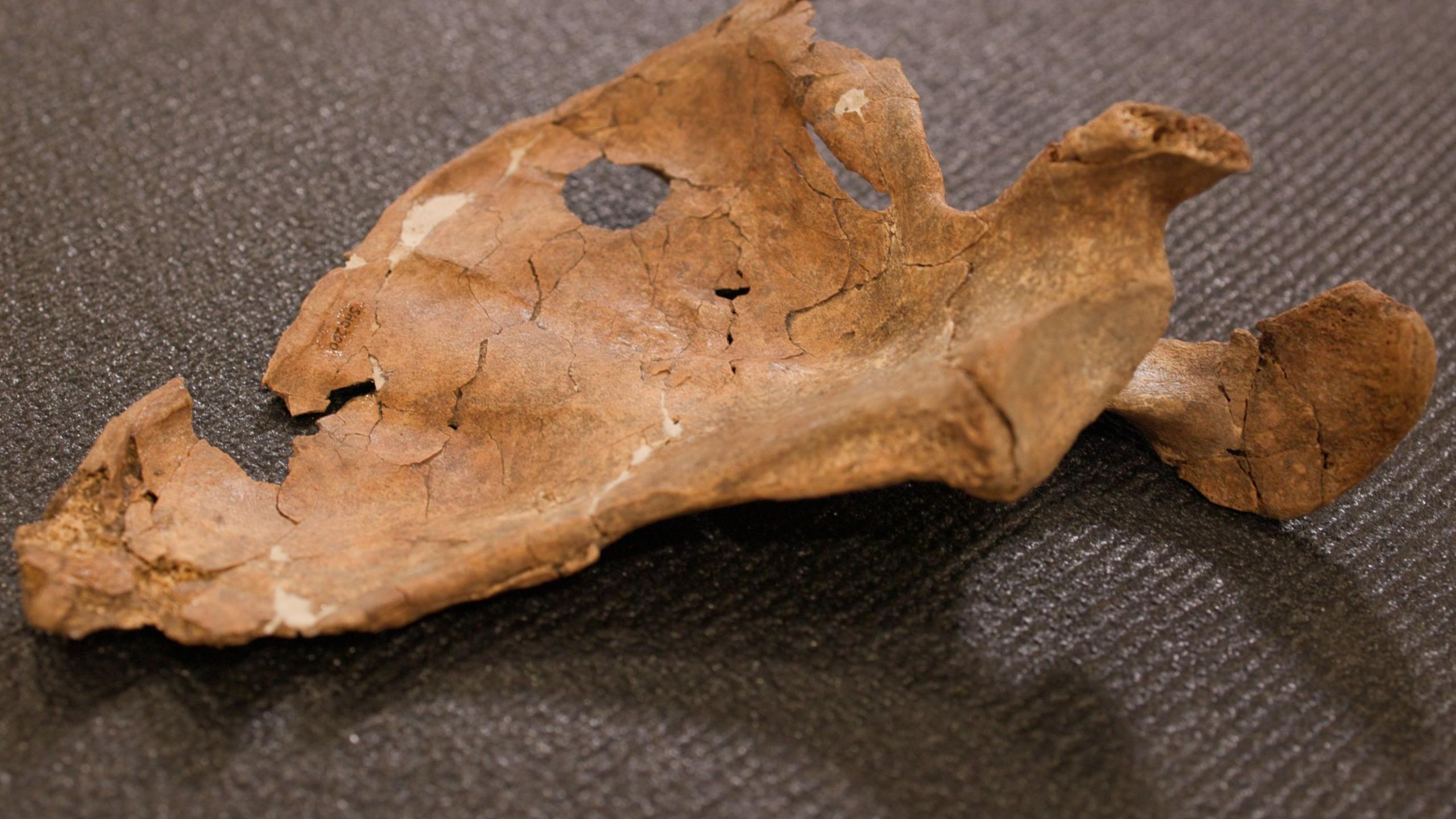
Archaeologists in Iraqi Kurdistan have uncovered a 15 mm hole in the left shoulder blade of a Neanderthal that died roughly seventy‑five thousand years ago. The round puncture is believed to have been caused by a sharpened wooden spear, offering the earliest concrete evidence of lethal interpersonal violence with such a weapon in that region.
The morphology of the wound – a precise circular hole – aligns with experiments that used reconstructed wooden spears to produce similar marks on bone. Dr. Emma Pomeroy, lead author of the Cambridge study, argues that the spear likely entered the chest, sliced through a lung and major vessels, and exited through the shoulder. This path implies a fatal strike, possibly aimed at the heart.
While the researchers acknowledge the possibility of an accidental hunting injury or even a friendly‑fire incident, a rival attack appears more plausible. Prof. Chris Stringer, a leading authority on early human remains, notes that the orientation and severity of the wound fit a targeted assault rather than an accidental blow.
The Shanidar Cave has yielded multiple Neanderthal skeletons, including ten individuals excavated in the 1950s. Recent analyses of other remains from the site reveal healed rib injuries and a partially healed wound likely from a stone‑tipped spear. Together, these findings suggest a pattern of violence among Neanderthal groups, challenging the view that organized conflict began only with agriculture.
This discovery sits alongside earlier evidence from a Spanish site called the Pit of Bones, where 430 kyr‑old skulls bore punched wounds and healed fractures, indicating repeated lethal encounters among hunter‑gatherers. Such data push the origins of human‑to‑human violence far back into pre‑historic times.
The implications of these findings are profound. They suggest that interpersonal violence may have been an enduring facet of human societies much earlier than previously thought, raising questions about the social dynamics of Neanderthals and the evolutionary roots of conflict.