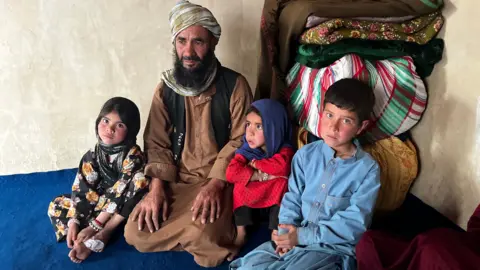
As dawn breaks, hundreds of men gather at a dusty square in Chaghcharan, the capital of Ghor province in Afghanistan. They line the roadside with weary faces, hoping someone will come along offering any work, which determines whether their families eat that day. Yet the likelihood of success is low. Juma Khan, 45, has found just three days of work in the past six weeks, earning between 150 to 200 Afghani (approximately $2.35-$3.13). My children went to bed hungry three nights in a row, he shares. I live in fear that my children will die of hunger. His story mirrors that of countless fathers in Ghor, where three in four people struggle for basic necessities, according to the United Nations.
The country now faces unprecedented levels of hunger, with 4.7 million people just steps away from famine. In Ghor, the desperation is palpable. Rabani, another father, reveals, I got a call saying my children hadn't eaten for two days. I felt like I should kill myself. But then I thought how will that help my family? The dire situation compels these men to make impossible choices, including selling their daughters.
Abdul Rashid Azimi, one of the fathers, expresses his heartbreak, stating, I'm willing to sell my daughters. I'm poor, in debt, and helpless. If I sell one daughter, I could feed the rest of my children for at least four years. He is not alone; similar sentiments emerge from other fathers, revealing how cultural perceptions of daughters, compounded by the Taliban's restrictions on women's roles in society, further complicate the situation.
Saeed Ahmad recounts the harrowing decision of selling his five-year-old daughter after her appendicitis surgery. If I had money, I would never have taken this decision, he admits. The practice of selling daughters for financial survival has tragically become a norm, exacerbated by the loss of essential aid as international support wanes.
The Taliban government deflects blame onto past administrations, claiming that the poverty inherited post-invasion is their main challenge. However, their policies restricting women's rights significantly undermine potential solutions. Many families, with no access to government support or humanitarian aid, face an uncertain future.
The flicker of hope is dim, and the stories unfolding in Afghanistan reflect the heartbreaking reality of hunger and deprivation, where families are forced into choices no parent should ever have to make.