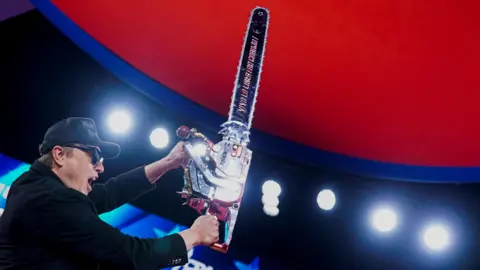
Elon Musk says he would not lead the Department of Government Efficiency (Doge) if he had his time again, but has maintained that its tumultuous efforts to shrink the size of the US government under President Donald Trump was 'a little bit successful'.
The billionaire boss of Tesla and SpaceX gave his reflections during a nearly-hour long interview on The Katie Miller Podcast on Tuesday.
Musk left Doge in May after initially promising to save as much as $2tn (£1.5bn) a year by slashing federal jobs and shuttering government programmes, among other cost-cutting measures.
Doge's website, which was last updated on 4 October, claims to have saved an estimated $214bn so far this year.
Conservative podcast host Miller, a former White House adviser herself who worked as a spokesperson for Doge, asked Musk whether he would do his work for the organisation again if he could rewind to the start of the year.
I mean no, I don't think so, Musk replied.
Instead, he said he would have 'worked in my companies, essentially', explaining that 'they wouldn't have been burning the cars'.
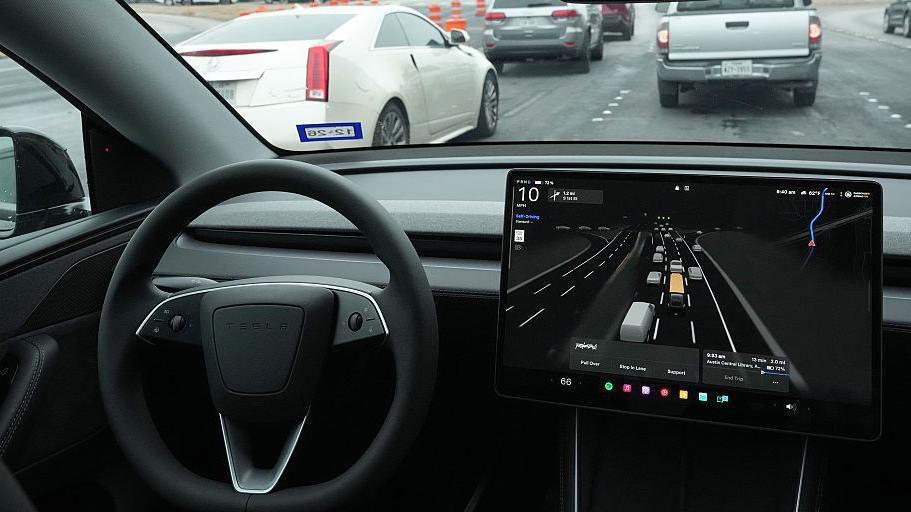
His comments reference a series of vandalism attacks on Tesla showrooms and vehicles earlier this year, which came in response to the highly visible political role in the Trump administration for the world's richest man.
Musk's involvement in US politics sparked global protests and boycotts against Tesla, and led to a spike in vandalism of Tesla's Cybertruck vehicles. In April, the firm said sales had fallen to their lowest level in three years and warned investors that 'changing political sentiment' could continue to hurt demand.
But Musk said he believed Doge had been 'a little bit successful, we were somewhat successful'.
You really want the least amount done by government as possible, he explained, adding that Doge had 'stopped a lot of funding that really just made no sense'.
Musk told Miller that Doge, which was created by an executive order on Trump's first day back in the White House, was a 'made-up' name 'based on internet suggestions'.
The advisory group, which is not an official government department, tackled Musk's vision at a fierce pace. It pushed for massive reductions in the federal workforce, as well as the shuttering of programmes and even agencies such as the US Agency for International Development (USAID).
Some of Doge's moves were met with legal fights or were reversed. When the group's cost-cutting resulted in bird flu officials at the US Department of Agriculture being fired, the Trump administration looked to re-hire them days later.
Musk's time at the helm of Doge not only appeared to cause issues for his business empire but also led to an explosive falling-out with the president himself.
Musk donated millions of dollars to the Trump campaign during the election and was a fixture at the White House for months, speaking at cabinet meetings and standing behind the president at events in the Oval Office.
But that relationship came to a grinding halt in June when Musk broke with the White House narrative and criticised a Trump-backed spending bill.
It led to a war of words on social media, with Trump at one point threatening to order Doge to look into Musk's own business dealings with the US government.
The pair's relationship now seems to be mended. Musk was spotted at a White House dinner with Saudi Crown Prince Mohammad bin Salman in November.
And Musk spoke positively of Trump in his interview with Miller, saying the president was the funniest person he knows and has 'great sense of humour'.