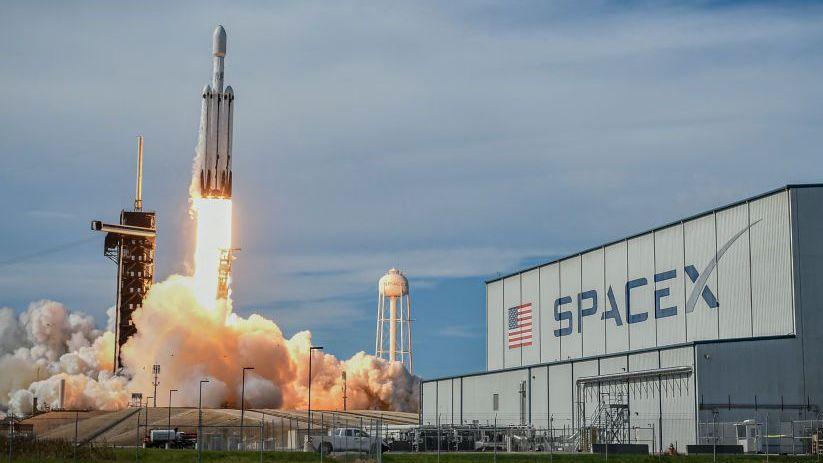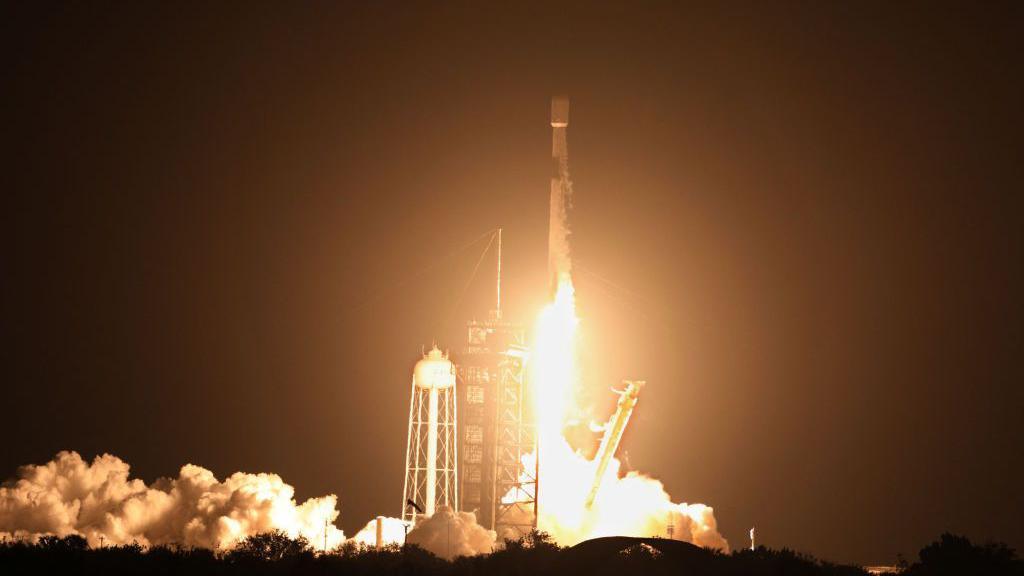
Elon Musk's SpaceX has applied to launch one million satellites into Earth's orbit to power artificial intelligence (AI).
The application claims orbital data centres are the most cost-efficient and energy-efficient way to meet the growing demand for AI computing power.
Traditionally, such centres are large warehouses full of powerful computers that process and store data. Musk's aerospace firm asserts that processing needs from the expanding use of AI are outpacing terrestrial capabilities.
This drastic increase in the number of satellites would significantly enhance SpaceX's existing Starlink network of nearly 10,000 satellites, which has faced accusations of congesting space, a claim Musk disputes.
The new network could comprise up to one million solar-powered satellites, as detailed in the application filed with the Federal Communications Commission, though a timeline for this plan has not been specified.
SpaceX believes the system would bring essential computing capacity needed to serve billions of users globally. It is depicted as the first step toward becoming a Kardashev II-level civilization, capable of harnessing the Sun's full power, a concept envisioned by an astronomer in the 1960s.
Musk elaborated on his social media site X, stating that the satellites would be spaced so far apart they would be difficult to see from each other, emphasizing the vastness of space.
These satellites would operate in low-Earth orbit at altitudes ranging from 500-2,000 kilometers (310-1,242 miles), similar to the current Starlink satellites that provide high-speed internet.
SpaceX argues that these orbital data centres would represent a greener alternative to traditional data centres, which consume significant power and water for cooling.
However, experts point out that launching hardware into orbit remains costly, the infrastructure to maintain it can be complex, and increasing space debris presents risks to the physical hardware.
There are also concerns about growing numbers of low-orbit spacecraft leading to potential collisions, and astronomers have previously reported interruptions to their work due to interference from the existing Starlink network.
Musk has consistently denied claims that his satellites are saturating the space environment and hindering competition.