In brief
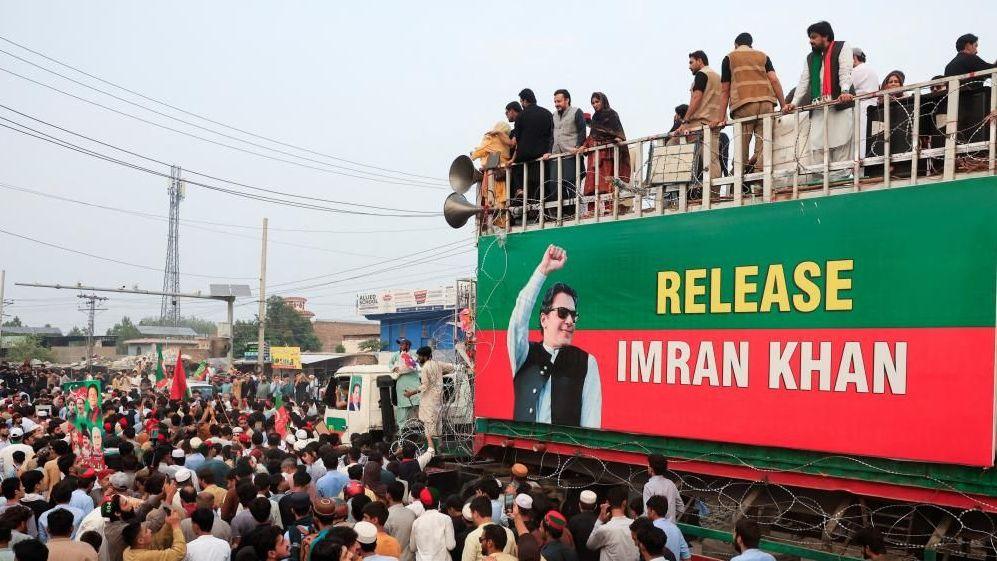
On Sunday the federal government declared a state of emergency in Khyber Pakhtunkhwa, the province that has harboured Imran Khan’s PTI for 13 years. The move comes after weeks of mass protests led by party supporters demanding Khan’s release and after accusations that the provincial administration was colluding with terrorist groups. While the government cites security and anti‑terrorism concerns, critics say the declaration is a political manoeuvre to sideline the opposition. The intervention has already seen roads blocked with shipping containers, the brief shutdown of schools and the internet, and a crackdown on PTI leaders. Experts warn that tightening control could inflame anger, risking deeper instability in an already tense nation facing militancy, regional disputes and a struggling economy.
The government declared a state of emergency in Khyber Pakhtunkhwa, a province that has supported Imran Khan’s Pakistan Tehreek-e-Insaf (PTI) since 2008. The decree suspends provincial authorities, closes schools, cuts internet services and brings the army into towns.
Khan’s supporters, who have marched for weeks across the province demanding his release, claim the emergency will silence them. “The PTI government was hand‑in‑glove with terrorists,” warned federal information minister Attah Tar‑ar, though evidence has not yet surfaced.
The military has built shipping containers across Peshawar’s boulevards, blocking traffic and setting up checkpoints. Police reports indicate a crackdown on PTI leaders, many of whom are now in hiding, and reports of tear gas being used during protests in Bara, the hometown of provincial Chief Minister Sohail Afridi.
Some analysts see the timing as a reaction to the party’s growing protests and a fear that Khan’s health and legal troubles could weaken opposition pressure on the ruling Pakistan Muslim League‑N. Senior South Asia analyst Michael Kugelman notes that “the PTI rank and file have grown restless,” and that the emergency is meant to send a strong warning to the party.
Others argue the move is a defence‑driven shift in the balance of power, with the military feeling emboldened by its recent diplomatic successes, such as the U.S.‑Iran dialogue, and a desire to maintain stability in the face of rising militancy and regional conflicts.
The emergency could have wider consequences. Pakistan’s security environment is already fragile, ranking first in the Global Terrorism Index 2026. “Using the military to pursue political ends risks escalating unrest,” cautions security expert Zahid Hussain. More aggressive operations could turn into casualty‑laden campaigns, potentially eroding public trust in the armed forces.
In short, while the government claims it is protecting provinces from terror, the long‑term effect may be far from stability. A crackdown that fuels anger could spark a wider crisis at a time when the country is already wrestling with internal and external pressures.