Europe Faces Uncertainty as Trump's Defense Policies Reshape Transatlantic Relations
As the Munich Security Conference approaches, the security landscape of Europe remains precarious, heavily influenced by the Trump administration's national security strategy.
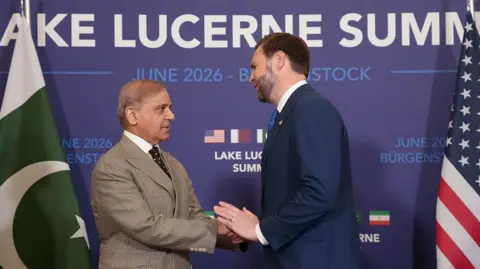
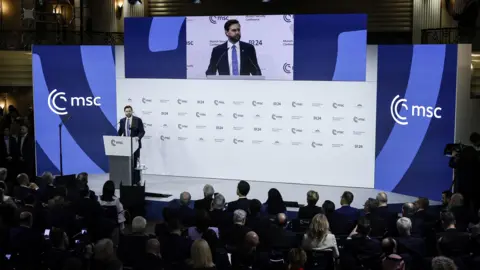
It has been a year since US Vice-President JD Vance delivered a bombshell speech at the Munich Security Conference. Last year, Vance criticized Europe’s migration policies and free speech standards, arguing that the continent’s gravest threats came from within. His stark assessment left the audience in shock and underscored the changing dynamics of transatlantic relations.
Since then, Trump's administration has disrupted the established world order, implementing punitive tariffs on allies and adversaries alike, while pursuing policies that have left Europe questioning US commitment to its defense, particularly in light of the ongoing tensions with Russia and the recent conflict in Ukraine.
This year's conference, starting later this week, will bring together US Secretary of State Marco Rubio and over 50 other world leaders, as European security needs intensify. The United States' latest National Security Strategy notably emphasizes that Europe must take on a greater role in defending itself, igniting fears that the US may withdraw its support.
The previous tensions have escalated recently with Trump's provocative comments on Greenland, suggesting a desire for its acquisition for strategic purposes, stoking concerns about the stability of NATO and US-European partnerships. Denmark's Prime Minister remarked that any aggressive US military action would jeopardize NATO's integrity.
While the crisis over Greenland has subsided for now, questions linger over the durability of US-European security ties. Observers note that although these relations are certainly strained, they have not entirely broken down. Sir Alex Younger, a former head of MI6, points out that Europe must be more proactive in shouldering defense responsibilities, especially given the historical imbalance in military expenditures.
The conference should serve as a platform to address these pressing issues, though the outcomes may not align with European interests. Analysts predict that reactions to the US National Security Strategy will mirror the shock that Vance's criticisms elicited a year prior, reflecting a significant shift in how the US engages with its allies.
Ultimately, questions remain about the reliability of Article 5 of NATO’s charter, which asserts that an attack on one member is an attack on all. As tensions with Russia intensify, the validity of this principle may come under severe scrutiny amidst Trump's unpredictable foreign policy approach.
In summary, this week's Munich Security Conference will likely highlight the fractures and evolving dynamics within the transatlantic alliance, challenging long-held assumptions about US-European collaboration and security commitments.