Ukraine's President Volodymyr Zelensky has met key European allies as he faces US pressure to reach a swift peace deal with Russia.
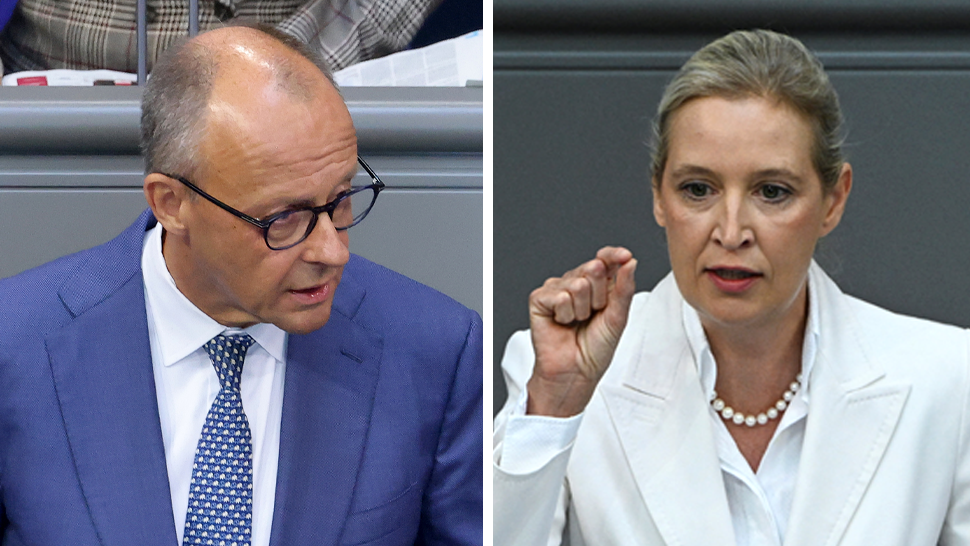
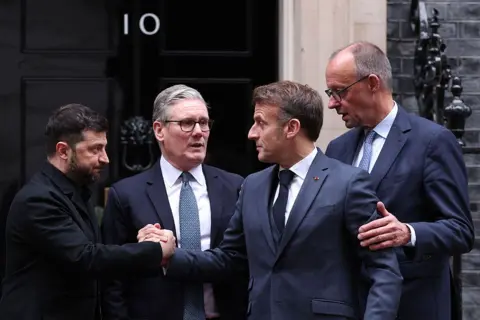
In London, Zelensky held talks with Prime Minister Sir Keir Starmer, French President Emmanuel Macron, and the German Chancellor Friedrich Merz. The meeting came amid US efforts to get Moscow and Kyiv to sign up - quickly - to a plan to end the war in Ukraine.
For Kyiv, the crucial, thorny issues are the question of ceding territory to Russia as part of any peace deal and obtaining strong security guarantees to ensure that Moscow respects an eventual agreement.
Ahead of the meeting in London, Starmer insisted - as he often has in the past - that Ukraine needed hard-edged security guarantees. He has also repeatedly said that Kyiv must determine its own future, not have conditions imposed on it.
The big names Starmer hosted in London discussed hugely significant issues for not only Ukraine's future but for the security of the continent as a whole. There's concern that if Russia is rewarded by being given Ukrainian territory as part of a peace deal, it could feel emboldened to attack other European countries in the future. But will Monday's talks in London make any meaningful difference to peace negotiations?
The visuals of Europe's arguably most influential nations standing shoulder-to-shoulder with Volodymyr Zelensky in Downing Street tell one story.
But when it comes to Washington, European leaders are walking a tightrope. In its National Security Strategy published on Friday, the US pointed the finger of blame at Europeans over Ukraine, accusing them of having unrealistic expectations as to how the war might end.
Although they have not publicly commented on the document, behind closed doors Europe's leaders fear Donald Trump is keen for a quick fix in Ukraine to turn his attentions elsewhere. But a quick fix, they worry, will not mean a long-lasting peace - only a temporary pause in Russian aggression in Ukraine and possibly further afield in Europe.
With the war in Ukraine actively affecting European security, leaders are cautious about expressing dissent against US policy too vocally. They are concerned that Russia's aggressive tactics, such as drone attacks and cyber sabotage across Europe, could destabilize the continent further if left unchecked.
As Europe grapples with internal budget constraints and military inadequacies, the ability to project strength without US support remains a point of contention. The delicate balance of negotiating peace while aligning with US strategies underscores the complexities facing European leaders as they champion Ukrainian sovereignty amidst global pressures.