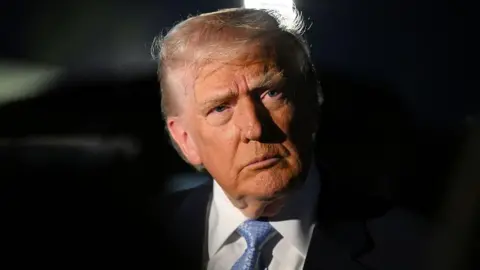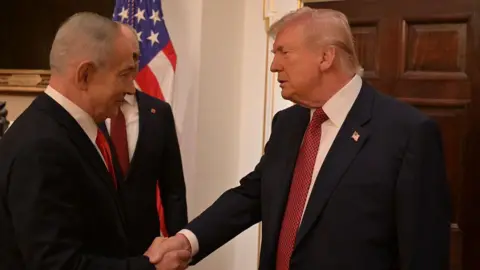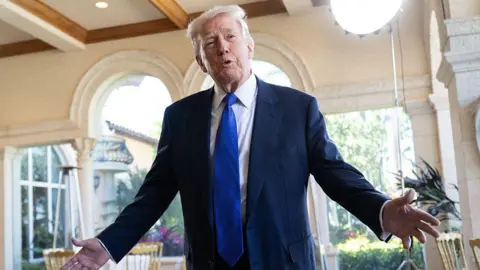
US President Donald Trump has announced a newly agreed trade deal with India's Prime Minister Narendra Modi, a development that could reshape the economic dynamics between the two nations. As per the agreement, tariffs on US goods imported from India will decrease from 25% to 18%, thereby easing trade tensions that have been prevalent due to recently imposed tariffs.
According to Trump's remarks on his platform, Truth Social, India is set to abolish trade barriers, pledging to stop buying oil from Russia. This would also mean the lifting of a 25% tariff penalty the US had previously imposed on India for its oil purchases from Moscow, responding to the ongoing conflict stemming from the Russia-Ukraine war.
The announcement follows closely on the heels of a landmark trade agreement between India and the European Union, which aims to enhance trade ties and reduce tariffs significantly, suggesting a trend of shifting alliances in global trade.
Modi has publicly expressed his optimism regarding the new trade arrangement on social media, describing it as a positive step for both nations that would unlock vast opportunities for collaboration.
In his statement, Trump emphasized that Modi had requested the trade deal, which he promptly agreed to, highlighting India's commitment to increasing its purchases of US goods, projected to exceed $500 billion, covering sectors like energy, technology, agriculture, and coal.
The relationship between the US and India has faced challenges in the past, particularly following Trump's imposition of hefty tariffs on Indian goods, a situation that led to a notable drop in Indian exports to the US. However, the latest agreement is seen by analysts as a potentially positive development that could lead to more robust economic cooperation.
As both India and the US continue to navigate these changes, experts suggest this agreement may mitigate some of the risks associated with China's growing influence in the global economy, especially as Modi embraces closer ties with other partners amid rising tensions with the US.