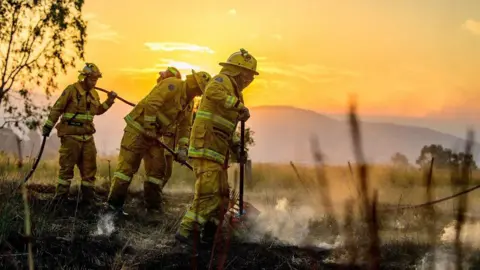
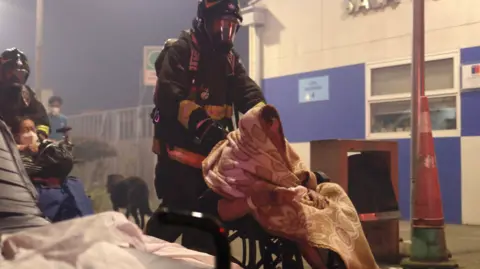
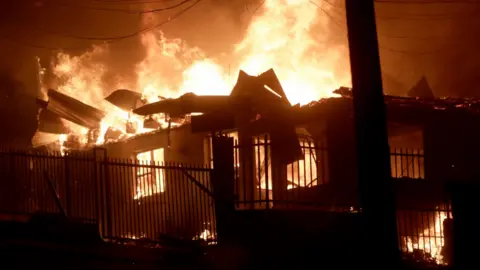
A coalition of firefighters and volunteers has entered their seventh day battling wildfires in western and central Nebraska, including the largest blaze in the state's history, which has killed at least one person and scorched thousands of acres of range and grassland.
David Boyd, a spokesperson for the coalition of responders, expressed concerns about shifting winds and rising temperatures. What’s different today is the wind will be less—but still, with gusts up to 30 miles per hour. If fire crosses the containment line, it can spread rapidly, Boyd warned.
Nebraska Governor Jim Pillen noted progress but emphasized that the fight against the flames is ongoing. The fight isn’t over, he stated during a recent Facebook post while assessing the damage in affected areas.
Four separate fires have burned over 1,300 square miles, more land than the state of Rhode Island. The Morrill County fire, the most devastating, covers around 80 miles from Bridgeport in the Nebraska Panhandle to Lake Ogallala, having burnt approximately 1,005 square miles, making it the most significant wildfire in Nebraska's recorded history.
Strong gusts exceeding 60 miles per hour last week exacerbated the fires, as they spread quickly over the dry terrain. Though conditions improved with reduced winds and rain this week, as of midday Wednesday, the Morrill County fire remained only 16% contained.
The second largest fire, the Cottonwood fire, has consumed more than 205 square miles, with roughly 40% containment by Wednesday. In contrast, two smaller fires nearby have been mostly contained.
Tragically, an 86-year-old woman lost her life trying to escape the blaze at her home. Emergency responders noted that entire neighborhoods have been evacuated as fire-fighting efforts intensify to protect residential areas.
The long-term impact of these fires on Nebraska's agriculture is notable. The state’s Agriculture Department Director, Sherry Vinton, highlighted concerns over how ranchers will cope with the loss of grazing land for over 35,000 cattle. Recovery could take several growing seasons, complicating ranchers' practices in the near future.
Firefighters continue their efforts to contain the blazes, cutting trenches and extinguishing hot spots within containment lines. With forecasts calling for lighter winds on Thursday and Friday, responders aim to make further headway. However, rising temperatures and winds this Saturday could re-ignite the threat, potentially leading to new fire outbreaks.
As wildfires ravaged the region, they're part of a chaotic weather pattern affecting the nation, marked by extreme heat on the West Coast and severe storms causing travel disruptions across the East Coast.