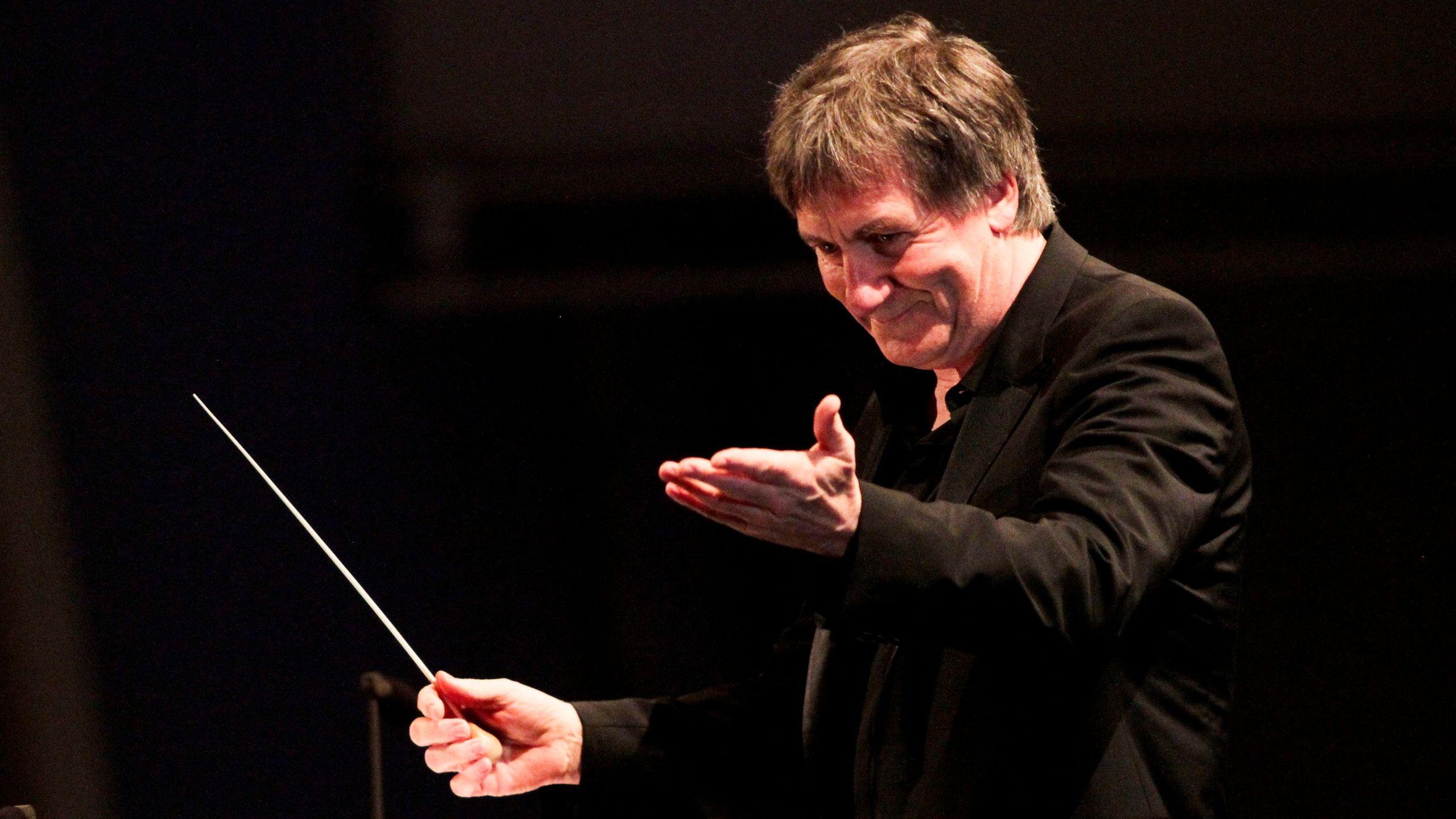
George Fenton, the composer whose music has become a global soundtrack for film, television and the natural world, died on 5 October at the age of 76.
The man behind the stirring score for the 1982 film Gandhi, the atmospheric themes of Blue Planet and the entire Earth Trilogy, was a pioneering musician whose work bridged cinema and science. His mastery of orchestral colour and sense of narrative has been felt in everything from The Fisher King to Groundhog Day and The Chosen. A prolific collaborator, he wrote the music for 18 of Ken Loach’s films, including Palme d’Or‑winning The Wind That Shakes the Barley.
Fenton’s career was marked by five Academy Award nominations, and he also received accolades from the BAFTA, the Ivor Novello Awards and the Emmys for his work on Blue Planet. He founded the Association of Professional Composers, later merging with the Ivors Academy, and in 2023 was appointed a Commander of the Order of the British Empire for services to music.
Family‑sourced news reports confirmed: ‘We are very sad to announce that George Fenton passed away unexpectedly today.’ He leaves behind his wife Amanda, his ex‑wife Jane, his children Gemma, Grace and Bridget and a family of grandchildren, with whom he shared an enduring love of music.
Born George Howe in Bromley, Kent, his father worked as a mechanical engineer and his mother, a former dancer turned nurse, played piano. With a wet‑plastic guitar in hand at age seven, Fenton traded football for music – a choice that set him down a path that would later lead him to echo the heartbeat of the oceans.
An early mentor, a weather‑had‑to‑be‑a‑chimney‑sweep named Brian Rudd, helped tune Fenton’s first guitar and, unintentionally, sparked his lifelong devotion. After a brief stint as a stage performer in Forty Years On he turned his artistic energies to composing, quickly becoming one of the most trusted voices in British music.
The blue‑toned score for Gandhi was only his 14th film assignment, yet it captured the soul of a nation and brought him to the top of the Academy nominations list. Midway through the 1980s he scored multiple Emmy‑winning BBC series, cementing his reputation for theme music that could become part of a nation’s soundscape.
Fenton’s work on the Earth Trilogy remains perhaps his most influential legacy. Scoring Blue Planet, the original Planet Earth and new instalments such as Frozen Planet, he used orchestral timbres to paint the grandeur of Earth's oceans and frozen realms, resulting in a soundtrack that is as much a part of the documentary as the footage itself. The music has been performed worldwide in symphonic concerts titled The Blue Planet in Concert.
Beyond film, he crafted memorable themes for BBC news programs including Newsnight and Breakfast Time, as well as the radio’s PM Programme. His compositional reach was wide: from the romantic drive of You’ve Got Mail to the heartfelt tug of the Lady In The Van, his tunes have inhabited a wide span of emotional terrain.
In academia, he served as a visiting professor at the Royal College of Music and the University of Nottingham, passing on his craft to new composers and championing the role of music across community and culture. As one of only a handful to become an Ivors Academy Fellow, his standing in music culture was undeniably high.
When asked on Desert Island Discs to choose one of his own works as a personal favourite, he selected ‘Reunion’ from the soundtrack to Accidental Hero, illustrating his love for music that resonates with the soul. He closed by stating that the greatest reward for a composer is the spontaneous joy that arises when a piece is first performed, a sentiment he lived by all his life.
George Fenton’s sudden passing leaves a void in the world of music. Yet his legacy – compositions that have defined generations of film and nature documentaries, the BBC’s newsroom soundtrack and a wealth of cultural influence – will continue to speak, echo, and inspire for decades to come.