Budapest's iconic Chain Bridge links both sides of the city - beautiful Buda with vibrant Pest - across the river Danube. At night, the lights that illuminate the bridge shimmer like mini moons in the waters below.
Normally, it's a favourite spot for tourist selfies - but not this Sunday.
Following a historic election result that unceremoniously booted Prime Minister Viktor Orbán out after 16 years in government, the bridge was lit up in red, white and green - the colours of the Hungarian flag.
Supporters of the triumphant Péter Magyar and his Tisza party said they felt they were getting their country back. A sense Magyar reflected back to them in his victory speech.
We did it, he said. We brought down the Orbán regime - together we liberated Hungary. We took back our homeland! Thank you! Thank you all!
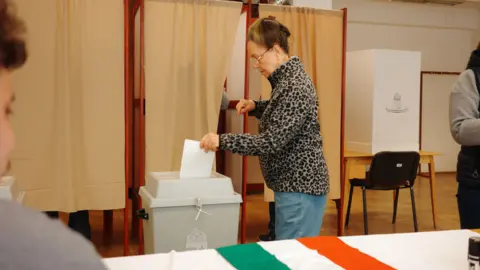
There was a definite sense here that history was being made. Voter turnout was record-breaking. Despite Orbán's iron grip on state media, the changes he introduced to the electoral system to favour his party and the huge influence his friends and family members have in positions of power in the illiberal democracy he said he turned Hungary into, the Fidesz leader was totally trounced at the polls.
I watched crowds of first-time voters dancing through Budapest's backstreets, drunk with a heady mix of hope and incredulity in the early hours of Monday morning.
As Zsofia spoke, her group of friends were loudly chanting Russians Go home! The irony of this protest sentiment directed at Orbán, known for his ties to Russia, is palpable.
Magyar's victory is not just a local win; it is reverberating throughout Europe. UK Prime Minister Sir Keir Starmer called it a historic moment for European democracy, while EU Commission President Ursula von der Leyen stated that Hungary had chosen Europe.
In contrast, Moscow's response will be far less jubilant. The ousting of Orbán is a significant setback for Vladimir Putin, who regarded Orbán as an ally within the European Union. Magyar has indicated a shift in foreign policy and greater collaboration with Ukraine, signaling a move away from Orbán's previous stances.
Looking ahead, Magyar is expected to pursue sweeping reforms that rebalance Hungary's international relations and address the pressing domestic issues, particularly the sagging economy and the high cost of living. While questions of Magyar's governance style linger, his initial steps will be crucial for both Hungary's future and its relationship with the broader European community.