The European Union's top court has ruled that Hungarian anti-LGBTQ laws violate EU rules and infringe its values of equality and minority rights.
The laws were brought in by Viktor Orbán's government in 2021 and banned so-called promotion of homosexuality or gender change to under-18s, arguing it violated child protection laws.
The European Court of Justice ruled that the Orbán reforms breached EU rules on a number of levels, significantly breaking the founding values of Article 2 of the EU Treaty - an unprecedented finding.
The ruling comes nine days after Hungarians voted to end Orbán's 16-year era of continuous rule.
The ECJ concluded that the Hungarian law interfered with rights such as a ban on discrimination based on sex and sexual orientation, respect for private and family life, and freedom of expression and information.
The law also stigmatised and marginalised people who were transgender or not heterosexual and associated them with people convicted of paedophilia, the court found.
The Hungarian law was declared contrary to the very identity of the Union as a common legal order in a society in which pluralism prevails.
John Morijn, a professor of law and politics in international relations at the University of Groningen, highlighted the significance of the Court's ruling, emphasizing that it guarantees the rights of marginalized groups cannot be negotiated away.
You cannot equate what is totally natural - that 10% of the population loves the same sex - with egregious crime, he stated.
Orbán's Fidesz party pushed through the legislation with a supermajority in parliament. The law previously led to a ban on public events involving the LGBTQ community, such as Budapest's Pride march, which proceeded regardless of the restrictions, leading to legal actions against the city's mayor.
The European Commission indicated that addressing the anti-LGBTQ law would be among its priorities for discussions with the new Hungarian government.
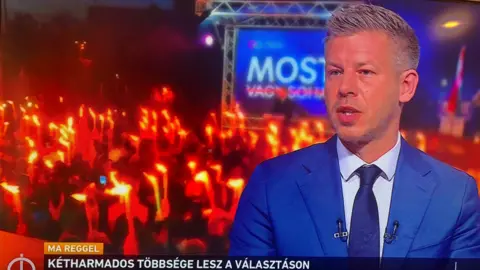
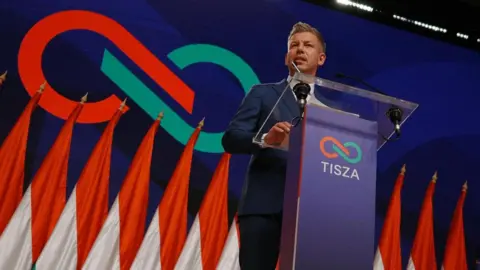
Newly elected PM Péter Magyar, who emerged victorious against Orbán, has promised a far more pro-European approach and plans to address this legislation as a priority.
LGBTQ rights advocate Katja Štefanec Gärtner urged the European Commission to expedite the repeal of the law, stressing it must be at the forefront of the new government's agenda.
Prof Morijn noted the ruling could set a precedent for future legal challenges regarding individual rights in other EU member states, reinforcing the fundamental principles of pluralism and equality enshrined in EU law.