In brief
Hungary’s parliament amended the child‑protection law, striking down provisions that effectively banned the portrayal or promotion of homosexuality and transgenderism. The move, welcomed by LGBTQ and human‑rights activists, comes as the new Tisza government works to undo the legacy of Viktor Orbán’s right‑wing rule. After the vote, the EU agreed to release €4.2 billion of frozen funds, and praised Hungary’s efforts to address rule‑of‑law breaches. Despite the progress, activists call for further reforms, including the recognition of same‑sex marriage and the right of trans people to change legal names.
Hungary’s parliament has voted to amend the child‑protection law, scrapping measures that stigmatise gay and transgender people.
The 2021 law, enacted by the then‑Fidesz majority, prohibited the “portrayal or promotion of homosexuality or transgenderism.” Since the 2024 elections, the Tisza administration has been working to dismantle the previous government’s legacy.
Minutes after the vote, Budapest announced that the European Commission had agreed to unlock €4.2 bn (£3.5 bn) of funds that had been frozen during the Fidesz years. The Commission said the new government had addressed rule‑of‑law breaches affecting EU budgets and urged readmission of Hungary to key programmes such as Erasmus+ and Horizon Europe.
The 2021 law had far‑reaching implications, affecting education, the right of assembly and other areas of civil society. The Tisza party, holding a two‑thirds majority, passed the package of reforms to reverse the Fidesz legislation.
“We are very happy that this got adopted,” said Tamás Dombos of the civil‑rights group Háttér. “We have been fighting this so‑called child‑protection law for five years. Many of the issues identified in the draft bill have now been fixed.”
While both governments portrayed child protection as a core concern, Orbán’s regime used it to label LGBTQ people as a threat to social morals, whereas Magyar’s government has been cautious, avoiding a full liberal platform but still easing restrictions.
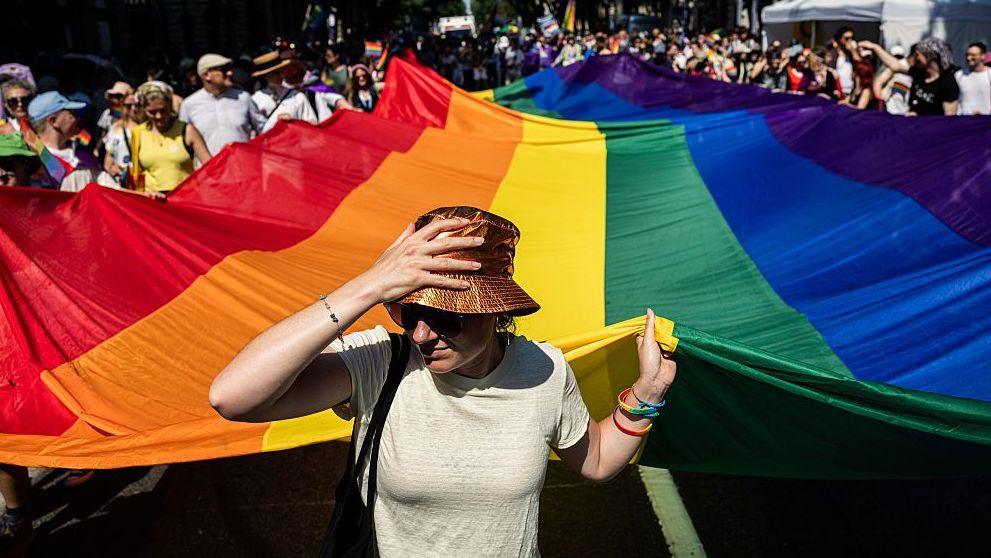
The ban was a turning point for the LGBTQ community, highlighted during the 2025 Budapest Pride march where an estimated 250,000 people gathered. The event proceeded without restriction after the city’s mayor faced no charges, and the next year’s march was held under normal conditions.
Orbán’s defeat in the child‑protection issue was amplified by the public revelation that his government had pardoned a deputy head of a children’s home who covered up a paedophile scandal.
Minister Dombos remarked that the door was still closed for full equality but “at least they are listening on the other side.” He added that the law’s removal is a significant improvement over the orbital years, but additional reforms—such as full recognition of same‑sex marriage, adoption rights for same‑sex couples, and allowing trans people to change legal names—remain urgent.
“I am very cautious,” Magyar said in an interview with the Finnish daily Helsingin Sanomat. “As prime minister, it is my duty to represent all Hungarians, and we must address sensitive issues, including those affecting sexual minorities.”
Fidesz and its sister party, the Christian Democrats, opposed the amendments. They maintained that “there is no place for the promotion of LGBTQ content in schools or the media.”