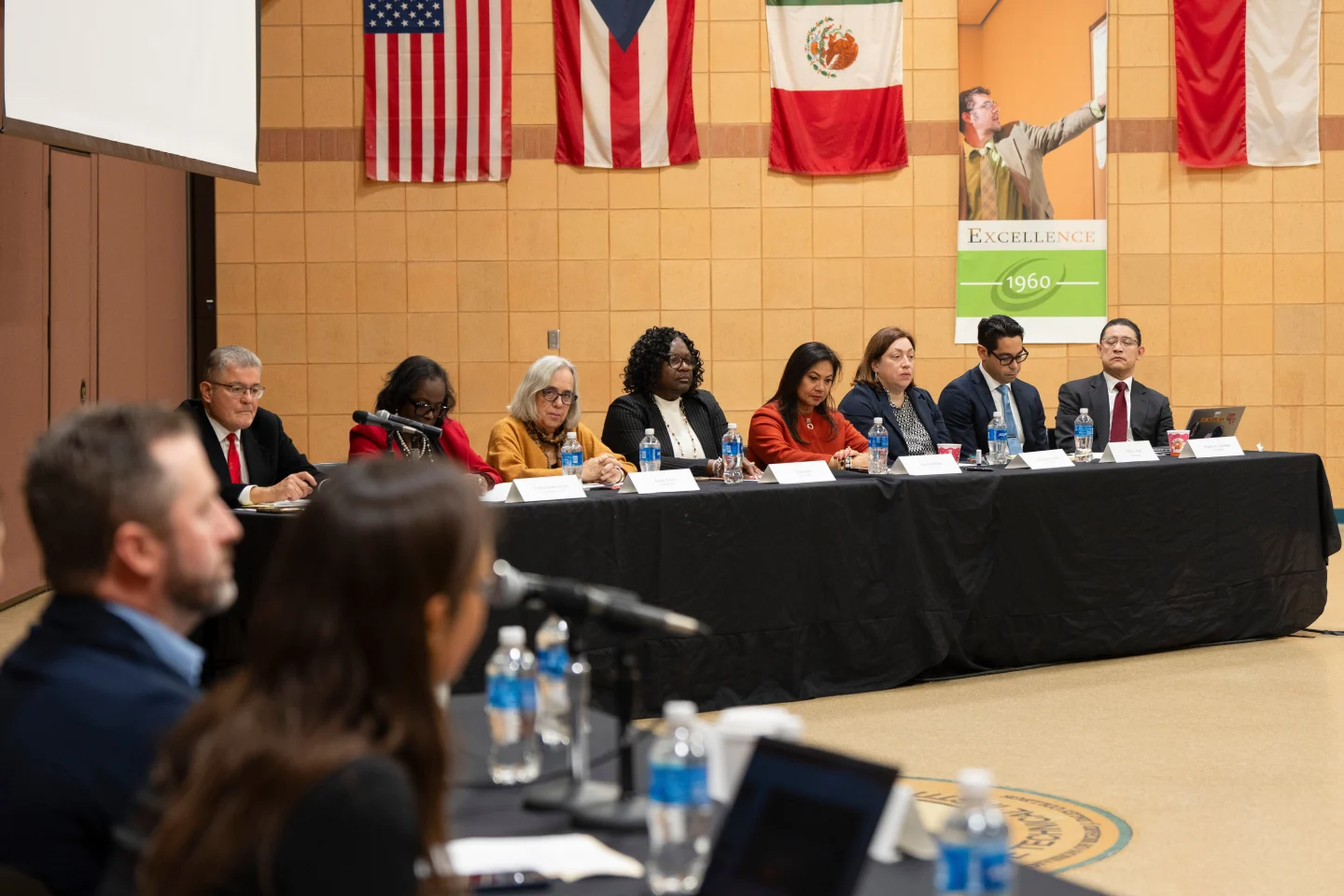
CHICAGO (AP) — A commission formed to document alleged harassment and abuse by federal agents during an immigration crackdown in the Chicago area reviewed the wide use of chemical agents in its first public hearing Thursday.
The immigration operation, which started in September, has been marked by aggressive tactics widely denounced by judges, elected leaders, and a growing number of residents in the nation’s third-largest city and surrounding suburbs. Formed by Illinois Gov. JB Pritzker, the commission is the latest resistance effort by a Democratic-led state to the Trump administration’s federal intervention, which critics say is discriminatory and an overreach of executive power.
“It’s going to be impossible to forget,” said Rubén Castillo, a former federal judge who leads the commission, of the immigration operation. “The one thing we cannot do is accept this. This cannot be the new normal.”
More than 4,000 people have been arrested in the Chicago area crackdown, during which there was a fatal shooting by federal agents. The operation prompted multiple lawsuits and a new law that shields immigrants from arrests near courthouses, hospitals, and schools.
The meeting came as a Border Patrol commander returned to the Chicago area after leading similar crackdowns in North Carolina and Louisiana, prompting backlash in the Democratic stronghold. Community leaders reported that the operation has been devastating, creating an atmosphere of fear and mistrust.
Members of the commission include attorneys, community leaders, and retired judges who aim to document the community impact accurately. Although the commission cannot compel testimonies or bring charges, it will issue a report next year with recommendations.
The Department of Homeland Security defends its approach, claiming efforts focus on removing violent offenders. However, many community leaders, including pastors and activists, argue that the majority of those arrested are not violent criminals and the operations perpetuate fear among residents.
The hearing was a crucial step in understanding the ramifications of the federal government’s actions and capturing the narrative of the impacted communities amid the ongoing immigration crisis.