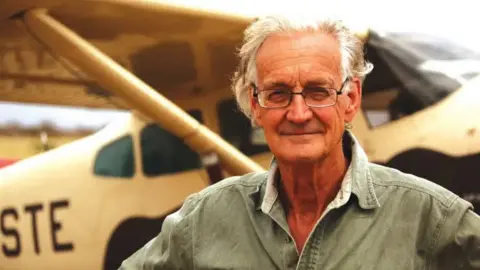
The world remembers Iain Douglas-Hamilton, the pioneering elephant conservationist who passed away at the age of 83 in Nairobi. Known for his extensive research on African elephants, Douglas-Hamilton spent decades advocating for their protection and raising awareness about the disastrous impacts of poaching.
Douglas-Hamilton’s work illuminated the social behaviors of elephants, showcasing their emotional depth and familial bonds. His groundbreaking research led to the banning of the international ivory trade, a crucial step in combating the alarming rate of elephant poaching.
Prince William paid tribute to Douglas-Hamilton, calling him a man who dedicated his life to conservation and whose legacy endures in our understanding of elephants. Reasoning his sentiments, he recalled the memorable moments spent with Douglas-Hamilton in Africa, reflecting the personal impact of the conservationist's work.
Born in 1942 in Dorset, England, Iain developed a passion for wildlife early in his life, which led him to Tanzania to study elephants' social structures. His remarkable journey in wildlife research established him as a preeminent authority in the field. His efforts didn't come without challenges; he faced life-threatening encounters with wildlife, including being charged by elephants and even shot at by poachers.
Despite numerous obstacles, Douglas-Hamilton displayed unwavering commitment to his mission. He founded Save the Elephants in 1993, a charity dedicated to protecting elephants and promoting human-elephant coexistence. His influential voice was paramount in global awareness regarding the ivory crisis, inspiring both policymakers and the public alike.
As several conservationists and friends, including Jane Goodall, reflect on Douglas-Hamilton's legacy, it is evident that his work has shaped not only the future of elephants but also the conservation landscape as a whole. He leaves behind his wife, Oria, two children, and six grandchildren, along with an unmatched legacy ingrained in the hearts of those who care for our planet's wildlife.
}