India’s World Cup Quest: Grassroots Gaps Hide Aspirations
The nation’s 1.4‑billion population is famous for cricket, yet its football dreams have faltered, preventing a first appearance at a FIFA World Cup.
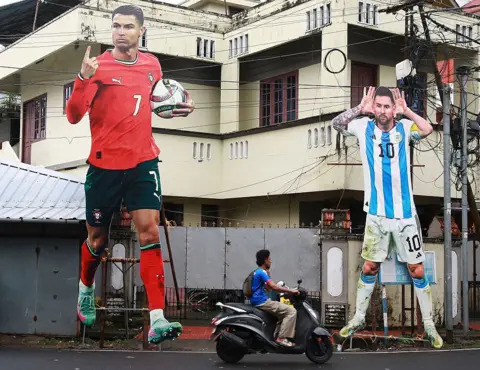
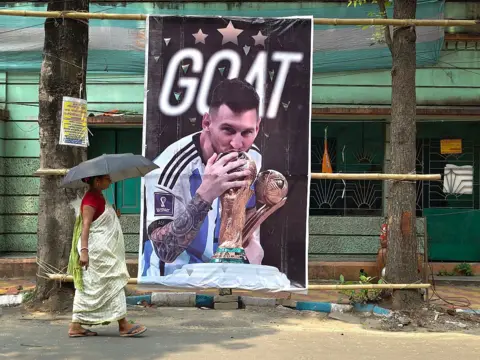
Even as states like West Bengal, Kerala and Goa celebrate the tournament, India’s men’s team remains stuck in the preliminary rounds of Asian qualifiers. Every announce at the press‑box is met with jokes about cricket‑playing citizens, illustrating the disconnect between the passion for football and the reality of the national squad.
Former national captain Baichung Bhutia acknowledges that the “programme is still a bridge too far” because “the right ecosystem is missing.” He stresses that a dedicated grassroots structure is the key to unlocking talent across the country.
Sustained debate continues over the AIFF’s policies. While the federation launched the Indian Super League in 2014, its future remains uncertain after last season’s commercial partners vanished. Critics argue that the federation’s budgetary and managerial shortcomings have led to an overall ridicule of Indian football’s governance.
Even if the top‑25 Asian teams at the World Cup—Australia, Iran, Japan, Jordan, South Korea, Uzbekistan, Qatar, Saudi Arabia, and Iraq—beat India, the coaching and talent pipeline remain uncoordinated. The country’s current FIFA ranking of 136th reflects this deficit, compared to 52 for Uzbekistan and 63 for Jordan.
Looking ahead, the AIFF leader Kalyan Chaubey promises to bring 35 million children into football by 2047 under the Vision 2047 plan. Yet the disconnect between lofty pledges and on‑field results is palpable, and the “reign plan” has yet to produce tangible progress.
An emerging pathway will be qualification for the 2026 AFC Asian Cup, which offers 24 teams from Asia a stage of competitive football. Experts suggest that a consistent presence in the Asian Cup could be the stepping stone to a World Cup berth.
Additionally, the AIFF is exploring a policy to allow overseas Indians—currently called OCI holders—to represent India without renouncing foreign citizenship. A successful policy change could significantly boost the talent pool, as seen by other nations relying on diaspora players.
Until such changes take hold, Indian fans will watch from afar, cheering world‑class stars while wondering how a nation as large as India can still not make the football world’s biggest stage.