In brief
The Michigan Senate race has turned into a heated political duel after Vice‑President J.D. Vance publicly branded Democratic contender Abdul El‑Sayed as “evil.” Vance leveraged the rally to criticize El‑Sayed’s background, even telling him to keep his wife’s name off his policy commentary. El‑Sayed responded with accusations of the Republican administration’s “evil” policies, spotlighting trade and domestic reforms. Republican candidate Mike Rogers, the former sheriff, remains a tough opponent, while polling shows El‑Sayed slightly ahead. The clash underscores Michigan’s pivotal role in the 2026 mid‑term elections, where both sides vie for a state that swung with both Biden and Trump in recent history.
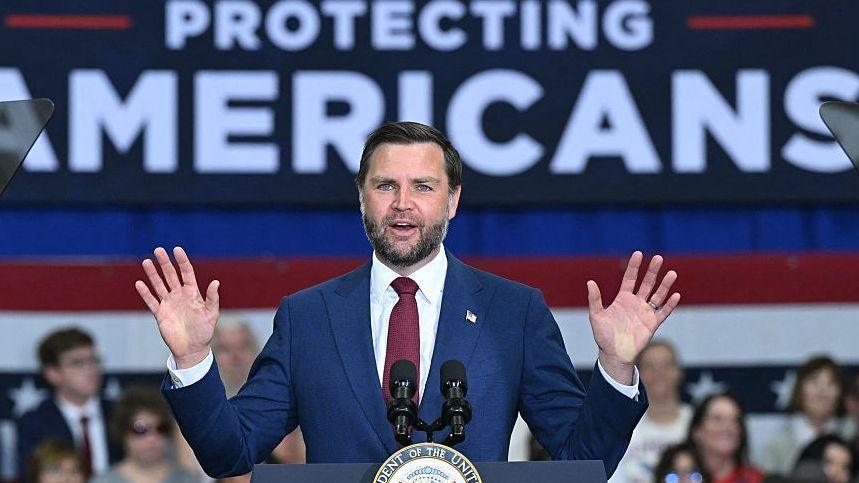
Vice‑President J.D. Vance arrived in Michigan’s Greater Detroit region to support former sheriff and Senate nominee Mike Rogers. During the evening rally, Vance took a sharp stance against Democratic candidate Abdul El‑Sayed, dubbing him “evil” and warning him to avoid certain cultural references that could be seen as divisive.
Vance’s remarks followed a brief exchange in which El‑Sayed appeared to link the Vice‑President’s late grandfather’s identity with concerns about the political implications of Mayor Usha Vance’s religion. The Vice‑President urged the challenger to keep such associations out of his public dialogue.
El‑Sayed fired back the next day on national television, accusing the administration of pushing “evil” policies—including healthcare cuts, tax incentives for the wealthy, and trade wars that affect everyday American life. He also highlighted what he deemed breaches of moral values in the current policy environment.
The campaign has reached a pivotal moment; recent surveys from a Michigan firm indicate that El‑Sayed holds a narrow four‑point lead over Rogers. Both candidates promise sharply contrasting approaches: Rogers with his law‑enforcement and earlier political experience and El‑Sayed with a grassroots, outsider narrative.
Michigan remains a linchpin in the 2026 mid‑term elections, having swung between Biden and Trump in key national contests over recent election cycles. The state’s outcome could shape the balance of power in the U.S. Senate, making this electoral drama highly consequential for the national political landscape.