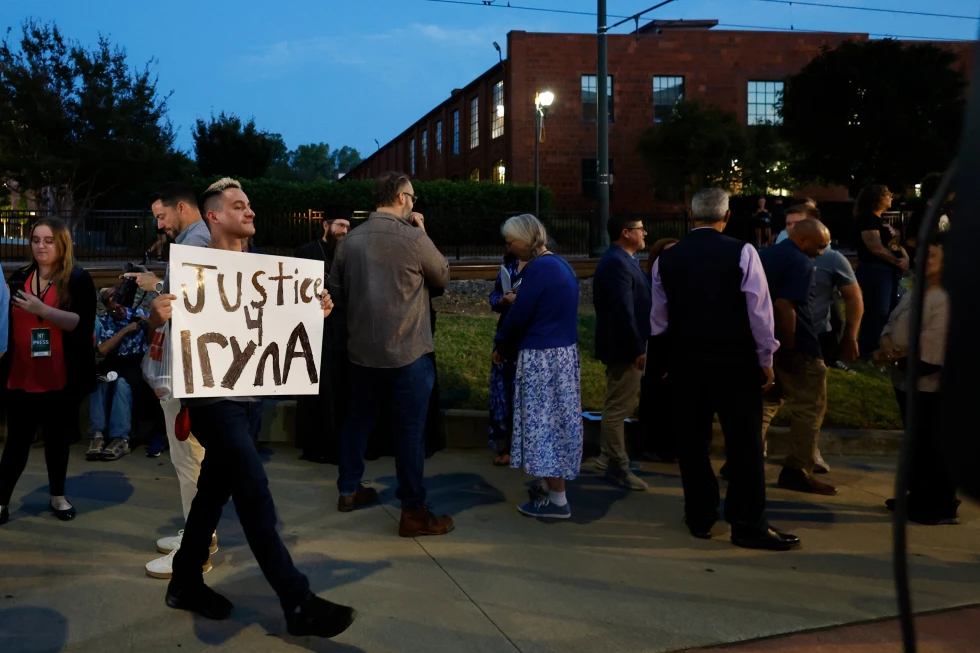
RALEIGH, N.C. (AP) — North Carolina Republican lawmakers are preparing to grill Charlotte-area leaders about crime-fighting tactics and spending, particularly in the wake of two stabbings — one fatal — on the light rail system in the Democratic-led city.
A state House oversight committee asked Charlotte Mayor Vi Lyles, Charlotte-Mecklenburg Police Chief Estella Patterson, Mecklenburg County Sheriff Garry McFadden and others to testify Monday at the Legislative Building.
The August fatal stabbing death of Ukrainian refugee Iryna Zarutska, followed in December by a non-fatal stabbing on the same Charlotte rail system, are among the chief reasons for GOP critiques of area law enforcement. The suspect in each stabbing — which drew comments from President Donald Trump — faces charges in state and federal court.
In invitation letters to testify, the committee’s cochairmen wrote high-profile crimes in recent years raise “serious concerns” about law enforcement staffing, “prosecutorial practices, and the City’s overall public safety strategy.”
The committee “has an explicit duty to ensure that local governments receiving and expending public funds are prioritizing the safety and security of North Carolina residents,” the letters read.
The committee’s public scrutiny has been useful for Republicans earning political points on hot-button issues. The panel can seek more documents and reports from local entities or threaten funding losses — although that couldn’t occur without separate action by the full General Assembly.
Decarlos Brown Jr., the man accused in Zarutska’s death, had more than a dozen prior criminal arrests before the most recent charge, and concerns had been raised about his mental health. Republican lawmakers, as well as Trump and Vice President JD Vance, blamed Democratic leaders in Charlotte and statewide for soft-on-crime policies they allege allowed Brown to stay out of custody.
Lyles wrote soon after Zarutska’s death that it was a “tragic failure by the courts and magistrates.” She and others have since highlighted additional safety measures for the light rail system.
Zarutska’s death resulted in a new state law that barred cashless bail for certain violent crimes and many repeat offenders. It also seeks to ensure more defendants undergo mental health evaluations.
Democratic Gov. Josh Stein last week issued an executive order aimed at mental health treatment for individuals confronted by police and incarcerated.
The suspect in the second light-rail attack, Oscar Gerardo Solorzano-Garcia, had been previously deported but returned to the U.S. and was arrested for illegal reentry.
Both suspects are currently jailed as their cases progress through legal systems.