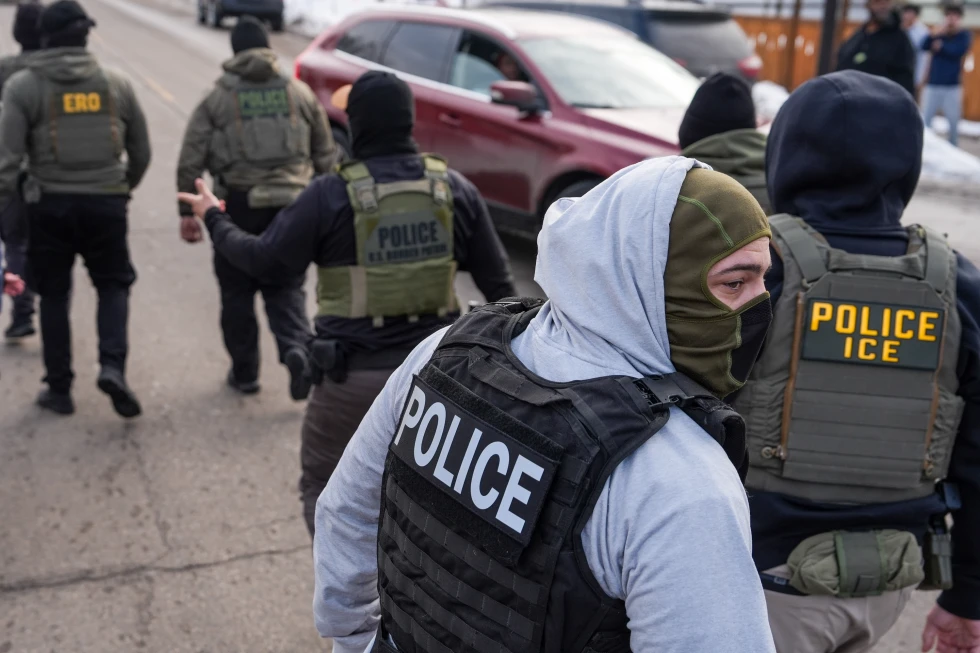
Recent scenes of masked federal agents detaining individuals in public have become a contentious symbol of the Trump administration's immigration enforcement strategy. While the Department of Homeland Security claims the masks serve to protect agents from online harassment, experts express concern about the potential for fear and distrust in local communities.
The debate intensifies ahead of a deadline for funding the homeland security budget in Congress, where lawmakers are split on whether to mandate that agents show their faces during operations. Democratic leaders have established a clear stance against the use of masks, insisting on accountability and transparency through policies such as requiring body cameras on officers.
House Democratic Leader Hakeem Jeffries emphasizes that the unmasking of federal agents is non-negotiable in budget discussions. He argues that visible identification is crucial for fostering trust and ensuring that federal enforcement operations do not intimidate communities.
While ICE defends its practices as necessary for the safety of its personnel, many Republicans support mask-wearing policies to protect agents from potential backlash. This divide underscores the larger political rift regarding immigration enforcement in the United States, fueling further debate on the role and methods of ICE amidst heightened scrutiny of law enforcement practices.
Calls for reforms extend beyond simply unmasking federal agents. Advocacy groups are highlighting the necessity to regulate when and how immigration officers can conduct operations, especially regarding the use of warrants and the targeting of individuals based on race or nationality. These critical discussions emphasize the potential implications for civil liberties and public safety as Congress confronts the realities of immigration enforcement in modern America.