In brief
The International Criminal Court (ICC) has commenced its war crimes case against fugitive Ugandan rebel leader Joseph Kony, marking a historic moment for international justice. Charged with 39 counts including murder and sexual enslavement, Kony has evaded capture for over 20 years. With no suspect present, the ICC's move to hold proceedings serves as a potential precedent for future cases involving unreachable perpetrators. Victims and survivors in Uganda are closely watching the developments, seeking recognition of their suffering.
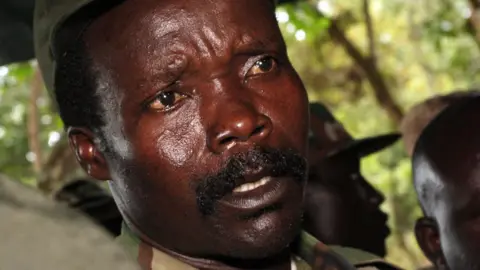
The International Criminal Court (ICC) has opened its war crimes case against fugitive Ugandan rebel leader Joseph Kony in its first-ever confirmation of charges hearing without the accused present.
The proceedings mark a historic moment for the court and could serve as a test case for future prosecutions of high-profile suspects who currently appear to be beyond its reach.
Despite an arrest warrant issued 20 years ago, Kony, the founder and leader of the Lord's Resistance Army (LRA), has managed to evade arrest. He faces 39 counts of war crimes and crimes against humanity, including murder, sexual enslavement, abduction and forcing thousands of children to fight as soldiers for the LRA.
Kony claimed he wanted to install a government based on the biblical 10 commandments and was fighting for the rights of the Acholi people in northern Uganda. However, his rebel group gained notoriety for heinous acts such as hacking off the limbs of victims.
Kony's notoriety increased significantly in 2012 due to a social media campaign highlighting the LRA's alleged atrocities. Yet, years of manhunts have failed to bring him to justice.
The courtroom was silent as the catalogue of charges against him, including gender-based crimes linked to thousands of women and girls, were read out. The crimes were allegedly committed in northern Uganda between 2003 and 2004.
Unfortunately the tentacles of international justice, even though they are lengthy, have not been sufficient to ensure the efficient arrest of fugitives, said the ICC's deputy prosecutor, Mame Mandiaye Niang, at the opening of the case.
The proceedings are being closely observed by survivors of the LRA’s violence, who have set up big screens in northern Uganda to follow the proceedings remotely. Rights advocates view this as a pivotal moment for validating their suffering.
The charges include horrific crimes such as the abduction of children, forced marriage, and sexual violence against women. Children were often kidnapped and compelled to kill for Kony's rebel group, and the effects of Kony's actions have scarred communities.
The ICC’s decision to move forward without Kony present underscores its commitment to seeking accountability, even in challenging circumstances. Legal experts believe this could set a crucial precedent for future cases against fugitives who remain elusive.
While a trial cannot commence until Kony is apprehended and present in court, this historic proceeding could help restore some sense of justice to the victims and the communities ravaged by the LRA.