Across the country, small groups are working to rebuild social connection amid rising loneliness in their own modest ways.
It sounds simple — building relationships. But they’re up against powerful cultural forces.
By many measures, Americans are socially disconnected at historic levels.
They’re joining civic groups, clubs, and unions at lower rates than in generations. Recent polling shows that membership rates in religious congregations are around the lowest in nearly a century. Americans have fewer close friends than they used to. They trust each other less. They’re hanging out less in shared public places like coffee shops and parks.
About one in six adults feels lonely all or most of the time. It’s the same for about one in four young adults.
No one has a simple solution. But small groups with diverse missions and makeups are recognizing that social disconnection is a big part of the problems they’re trying to address, and reconnection is part of the solution.
There’s a Baltimore neighborhood trying to build a culture of giving and mutual support, and a Pittsburgh ministry focused on healing those wounded by poverty and violence. In Kentucky, a cooperative is supporting small farmers in hopes of strengthening their rural communities, while groups in Ohio are restoring neighborhoods and neighborliness.
“We need to build a movement centered around connection,” former Surgeon General Vivek Murthy told The Associated Press. “The good news is that that movement is already starting to build. … What we have to do now is accelerate that movement.”
In 2023, Murthy issued a report on an “epidemic of loneliness and isolation,” similar to previous surgeon generals’ reports on smoking and obesity. Social isolation and loneliness “are independent risk factors for several major health conditions, including cardiovascular disease, dementia, depression, and premature mortality,” it said.
Finding ‘personal connections’ in Akron
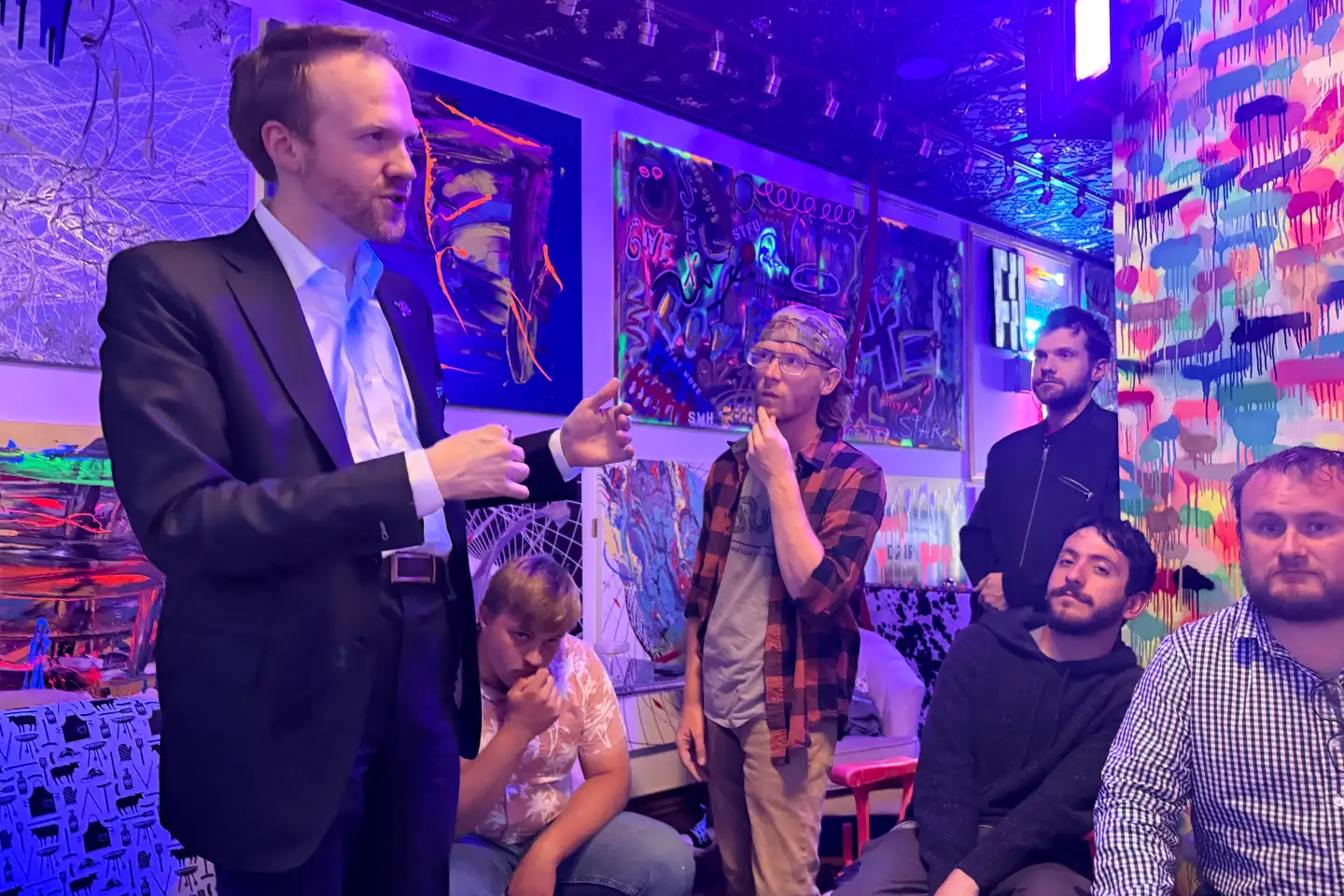
Murthy recently met with groups working toward community repair in Akron, Ohio, as part of his new Together Project, supported by the Knight Foundation.
In one meeting, leaders of the Well Community Development Corp. spoke about fostering affordable housing and small businesses in a marginalized neighborhood and cultivating social gatherings, whether at a local elementary school or the coffee shop it launched in a former church.
One encouraging development: Families have resumed trick-or-treating after years of largely dormant Halloweens in the neighborhood.
“Those types of things make a big difference,” said Zac Kohl, executive director of The Well. “It’s not just a safe, dry roof over your head. It’s the personal connections.”
Across town, more local leaders met in a community room overlooking Summit Lake. The urban lakefront now draws joggers, fishers, and those grilling. Summit Lake Nature Center provides educational programs and urban garden plots, strategically creating spaces for people to interact.
“I love that you’ve worked on creating spaces where people can gather and connecting them with nature,” Murthy told the gathering.
Neighbors ‘responsible for each other’ in Baltimore
On an October afternoon on Baltimore’s outskirts, neighbors gathered for a feast with homemade vegan jambalaya, beet salad, and fresh-roasted goat meat. The event was a part of an initiative focusing on backyard farming and environmental cleanup.
Ulysses Archie explained how they transformed their block into a hub of community connection, hosting food distributions and celebrations.
“The core of what we do is building relationships,” Archie said.
As part of their ‘intentional’ community, they help each other with everything from potlucks to childcare. Resident Michael Sarbanes noted the importance of community in preventing burnout from social service work.
Connecting to the land and each other in Kentucky
In New Castle, Kentucky, a local cooperative initiative aims to strengthen rural communities by supporting farmers and fostering social ties through communal events.
The “Beef Bash,” while centered on local cuisine, focuses on community cohesion and the benefits of cooperative farming, enriching not just the local agricultural landscape but also social connections.
Mary Berry, executive director of the Berry Center, highlighted that “With just a little help, people and land can heal.”
Healing ‘block by block’ in Pittsburgh
In Pittsburgh, the Neighborhood Resilience Project works to combat social isolation through community engagement and services. Their approach emphasizes trauma-informed development and aims to address social isolation across the community.
Rev. Paul Abernathy stated that community building is essential for healing neighborhoods plagued by isolation and violence. The project hosts a food pantry and health clinics while working directly with residents to mitigate feelings of loneliness.
“It has to be healed person by person, relationship by relationship, block by block,” Abernathy emphasizes, reinforcing the significant role of community in tackling loneliness.
As America confronts a growing crisis of isolation, these grassroots efforts shine a light on the potential of community-driven initiatives to foster meaningful connections and enhance collective well-being.