In brief
On 29 June, two fishing trawlers overloaded with Rohingya refugees slipped out of Rakhine state and never returned. Rough monsoon seas and poorly maintained vessels almost certainly caused capsizing, leaving many—perhaps half women and children—dead. Survivors remain unknown as bodies are only recovered weeks later. The tragedy exposes the brutal reality of the clandestine network that pushes millions in desperate conditions toward dangerous maritime journeys to Thailand, Malaysia or Indonesia. Local and regional efforts have stalled, leaving the refugees with no safe corridor out of the region.
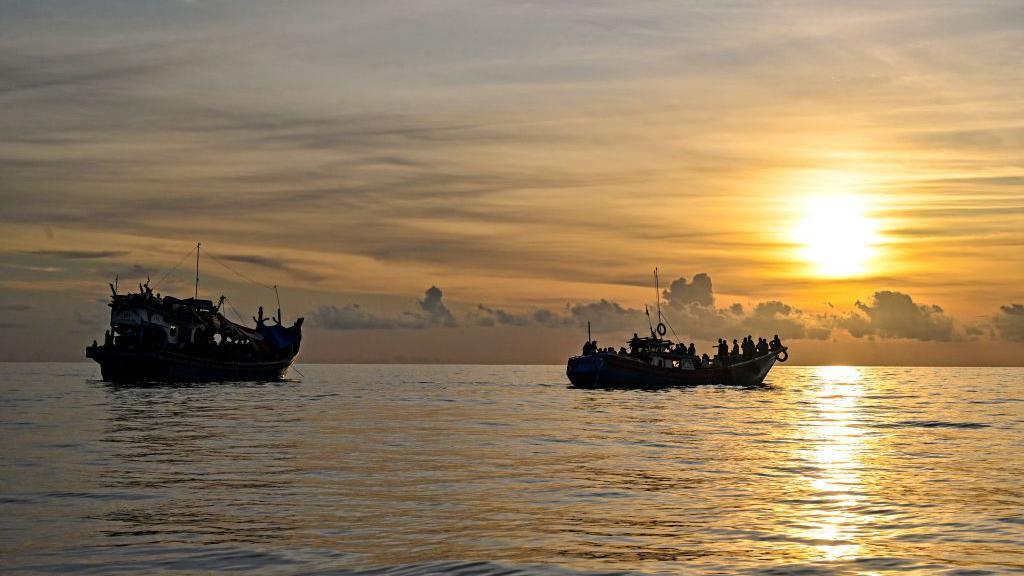
On 29 June, two fishing trawlers overloaded with an estimated 530 Rohingya asylum seekers departed Myanmar’s Rakhine state, heading toward Thailand and Malaysia. They never returned, leaving the region with one of the largest maritime disappearances in the refugee crisis.
The vessels, often old trawlers fitted to carry as many people as possible, were barely seaworthy. Coupled with the onset of monsoon, the seas grew rough, and engines unreliable, the likelihood that both boats capsized is high.
Reports suggest that many of the passengers were women and children. Evidence from recovered bodies along Bangladesh’s coast—one wash‑up of a woman and later multiple others—supports the theory that the boats sank or were destroyed at sea.
The region is still embroiled in conflict: the Arakan Army holds much of Rakhine, fighting the Myanmar military, while telecommunications are largely cut. This isolation hampers communication, making it difficult for families to confirm the fate of their loved ones, and for investigators to trace the boats’ movements.
Chris Lewa of the Arakan Project, who manages a network of contacts that bridges Myanmar, Bangladesh, Thailand, Malaysia, and Indonesia, was instrumental in piecing together the boats’ departure. She confirmed both vessels left on 29 June—one in the morning, one later that day—intending to head south to the coast of Myanmar before being transferred to smaller vessels that could reach land.
The typical route involves a “mother ship” taking refugees from Rakhine or Teknaf into the Bay of Bengal, then offloading them on beaches in southern Thailand or eastern Sumatra. After securing payment from families, the smuggler network discreetly moves refugees across borders to Malaysia.
With land routes within Myanmar shut down, refugees are left with perilous sea journeys as their only escape. These routes have become hotter in 2026, with an estimated 10,000 people believed to have left via 74 boats since September last year—far higher than in prior years, driven by famine‑like conditions in Rakhine and overcrowded camps in Bangladesh.
Malaysia remains an obstacle: its navy swiftly intercepts vessels and pushes refugees back into open sea, and local fishing communities cooperate with authorities. Thence, smuggler networks rely heavily on Thailand’s transit system.
UNHCR and regional agencies have called for safer, regulated routes, yet no single government has committed to easing the perilous passages. The Rohingyas are caught between conflict, human trafficking, and relentless desertion of safe avenues, with each month amplifying the suffocation of their living conditions.