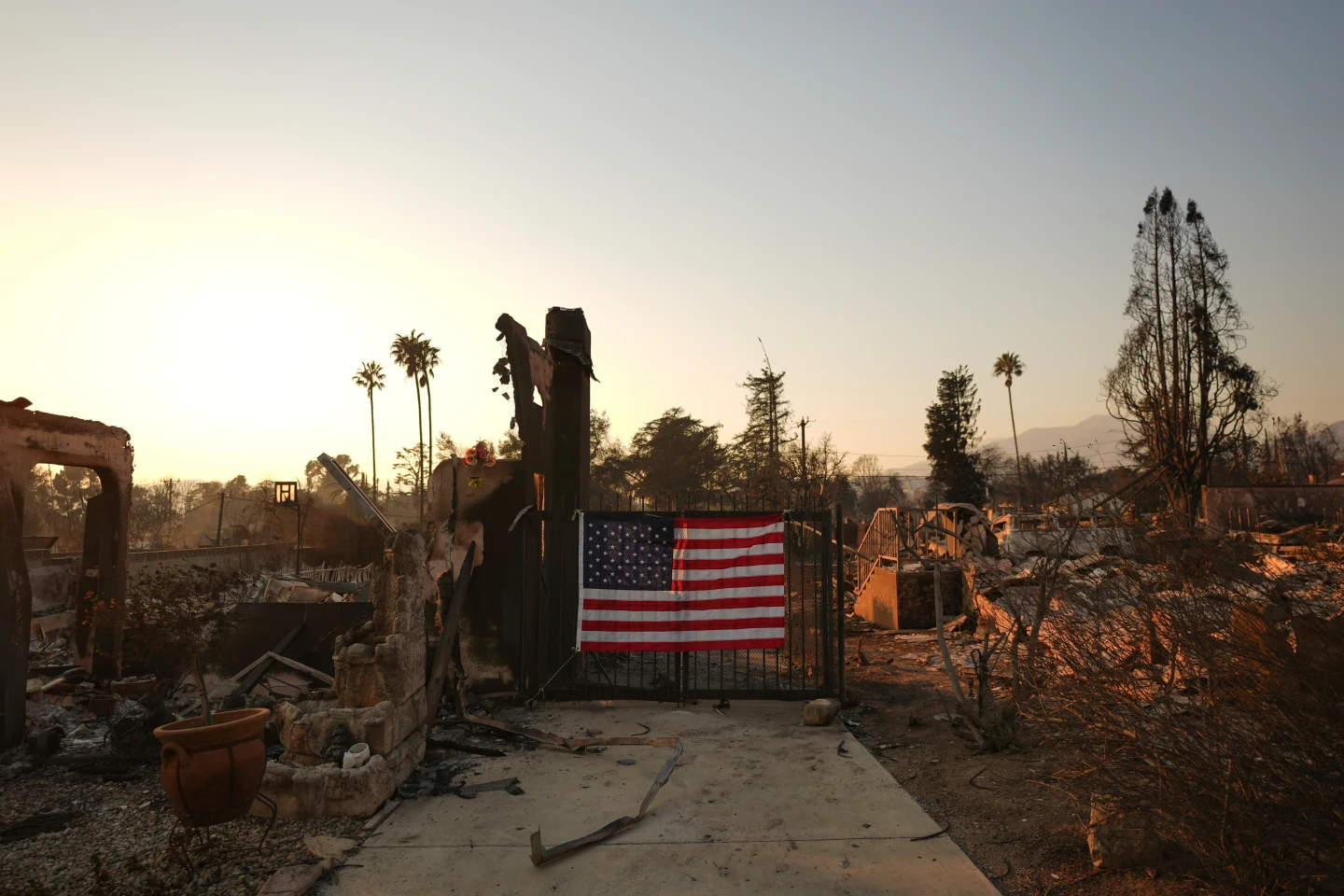
Survivors of the 2025 Eaton Fire in Altadena, California, have made the tough decision to accept an immediate settlement from the responsible utility. This choice, which allows for a quicker recovery and rebuilding process, comes with significant tax implications.
Unless Congress enacts a controversial bill, these settlement payments could be considered taxable income, potentially reducing the financial assistance available to survivors and jeopardizing their eligibility for additional government support.
“The news of possible taxation was met with disbelief,” said Bree Jensen from the Eaton Fire Long-Term Recovery Group. “Many residents are overwhelmed by the financial hurdles ahead.”
Others in this situation include survivors from devastating fires in Colorado, Hawaii, and Oregon, all facing similar challenges after a critical tax exemption expired at the end of 2025.
In recent years, Congress has intermittently provided tax relief for wildfire settlements, but recent struggles to pass comprehensive legislation have left survivors without financial security as they navigate rebuilding their lives. A bipartisan bill to extend tax relief has passed committee approval but awaits a vote in the House.
One homeowner shared her financial fears, stating, “We have to operate as though we don’t have that money yet.” With mounting construction costs, including a projected total nearing $1 million, every penny counts, especially against potential taxes that could take as much as 37% of their settlement.
As lawmakers remain entrenched in debates over various national issues, many survivors express uncertainty about the priority of extending disaster tax relief. “Expectations are low; it’s hard to believe anything will get done in time,” said Jenn Kaaoush, a fellow survivor and council member in Colorado.
Given the financial implications of potential taxation, survivors fear the additional stress it could place on their recovery efforts, with each decision becoming increasingly critical as rebuilding costs escalate. As attorneys highlight, the compensation secured from these settlements often plays a pivotal role in the livelihoods of fire-affected families, determining the pace and success of community recoveries.
The utility in question has acknowledged that its equipment may have initiated the Eaton Fire's devastating array, which resulted in 9,000 destroyed structures and claimed at least 19 lives. Thousands of families are now navigating options for compensation while facing an uncertain future, primarily hinging on laws being debated in Congress.
For those who rely on these settlements to recover, including the many who experienced heartbreak with losses over their homes, the financial outlook remains tenuous, hinging on the swift enactment of supportive legislation.