California's blustery San Francisco Bay, while known for its iconic Golden Gate Bridge and busy ferry services, has recently seen a worrying increase in sightings of Eastern North Pacific grey whales. Apart from the amazement they bring to locals and researchers observing their behavior, there are growing concerns over why many whales are showing signs of malnourishment and death.
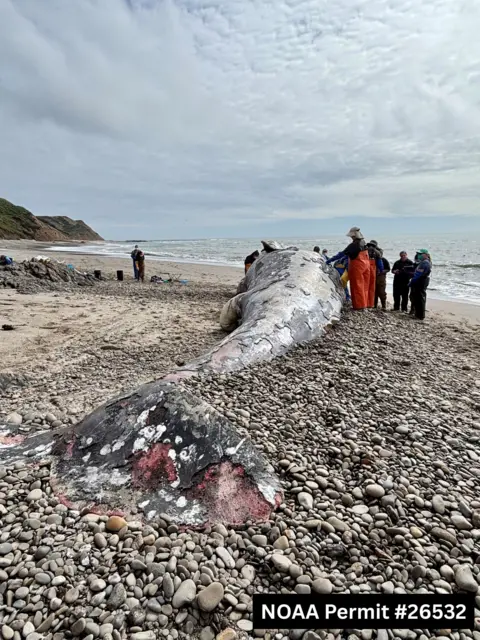
In 2025, San Francisco Bay recorded its highest fatality rate of grey whales since 2018, with 21 dead whales documented. So far this year, researchers have identified seven dead whales, attributing these incidents to a combination of decreasing prey availability, adverse climate conditions, and human-caused factors.
Josephine Slaathaug, a lead researcher from Sonoma State University, notes that prior to 2018, grey whales did not commonly stop in the bay during their migration, but a noticeable shift has occurred. It's a new habitat that they've chosen to utilize, she explains, indicating a possible change in migratory behavior due to diminishing food sources in the Arctic.
The grey whale's remarkable migration of over 15,000 km is being impacted as many individuals are appearing in the bay in less than optimal condition. Adults and juvenile males are increasingly spotted in underfed states, raising concerns that they may lack the necessary energy reserves to complete their migration.
Notably, Slaathaug's research highlights that a significant number of these whales are encountering fatal ship strikes in the bay. Despite whales not being currently classified as endangered, their population has seen a dramatic decrease from approximately 27,000 in 2016 to around 12,500 by 2025, raising alarms of an "unusual mortality event".
As these issues grow, scientists are putting concerted efforts into understanding how these anthropogenic effects are altering migratory routes and reducing food supplies. They stress the importance of exploration into these patterns, as opportunities to study grey whale behavior in the bay could yield crucial insights into conservation efforts moving forward.
With a proactive approach, the US Coast Guard is collaborating with environmental scientists to install monitoring technology and improve safety protocols, which may help reduce the risk of collisions between vessels and whales.
Kathi George, part of the research team involved in necropsies of the deceased whales, emphasized the necessity of understanding these changes: Whales can be indicators of broader environmental changes. If we can promote safety, this could become a critical foraging stop to ensure their survival during long migrations.