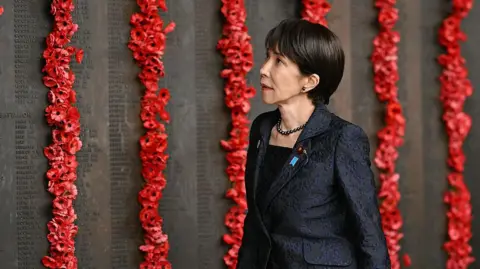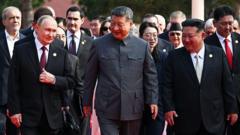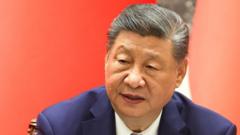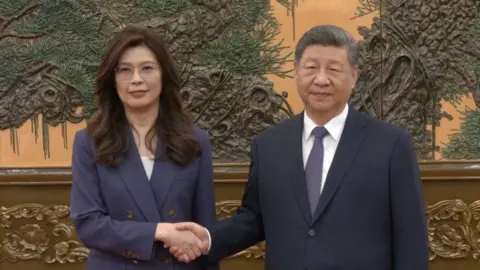
In a significant diplomatic event, China's President Xi Jinping received Taiwan's main opposition party leader, Cheng Li-wun, in Beijing. This meeting, held at the Great Hall of the People, highlights both sides' desires for cross-strait peace.
Cheng, the first sitting leader of the Kuomintang (KMT) to visit China in a decade, has positioned her trip as a step towards peace in an increasingly tense relationship. Her visit comes after Beijing cut off high-level communications with Taiwan following the election of the Democratic Progressive Party's (DPP) Tsai Ing-wen in 2016, who has been critical of China's stance on Taiwanese sovereignty.
During the meeting, Xi emphasized that the leaders aim to 'safeguard the peace and stability of our shared homeland' and expressed China's intent to strengthen exchanges with Taiwan's parties, contingent upon opposing Taiwan independence. He reiterated a sentiment that both sides seek peace and stability.
In response, Cheng acknowledged the mutual aspirations of the people on both sides and described fostering understanding and cooperation as essential for avoiding conflict. However, her trip has been met with criticism from the DPP, which accused her of compromising Taiwan's independence and sovereignty.
Historically, the KMT has maintained closer ties with China, but Cheng's more enthusiastic approach contrasts with her predecessors' cautious engagement. Beijing has not recognized Taiwan's ruling leadership of Lai Ching-te, branding them as 'separatists' and returning to a more strained rhetoric.
Despite the contentious atmosphere, most Taiwanese citizens express a desire for maintaining a status quo in cross-strait relations, aiming to avoid conflict while asserting their identity as a sovereign nation.
}