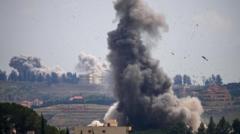
Jihadist groups in West Africa are increasingly carrying out drone strikes, a trend that is raising alarms about a potential 'war from the skies'. Reports from violence monitoring organization Acled reveal that at least 69 drone strikes have been conducted by an al-Qaeda affiliate in Burkina Faso and Mali since early 2023. Two Islamic State affiliates have also executed nearly 20 strikes, primarily in Nigeria, where insurgency has persisted for nearly 25 years.
The recent drone activity included a significant attack on January 29, where jihadists targeted a military base in Borno state, Nigeria, deploying both armed drones and ground fighters, resulting in the deaths of nine soldiers from the Islamic State's West Africa Province (Iswap).
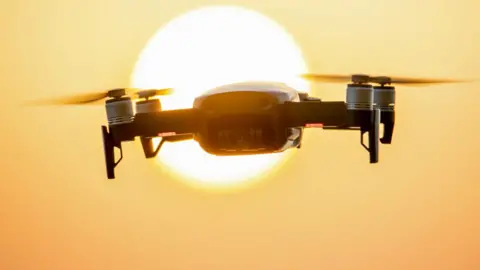
These jihadist groups predominantly use commercially available quadcopter drones that can be flexibly converted for warfare, including being rigged with explosives for strikes, or utilized for surveillance ahead of ground operations.
Despite Nigeria's tight regulations controlling the import and use of drones, these jihadist factions access such technology through various smuggling networks. Experts express concern over this shift in tactics, as drones enable lower-cost attacks and intelligence-gathering without significant risks to the militants.
Iswap has notably intensified its use of drones in recent attacks, conducting at least ten strikes across Nigeria and extending into Cameroon, Niger, and Chad—regions impacted by ongoing violence. In contrast, another IS affiliate, the Islamic State of Sahel Province (ISSP), has similarly launched drone strikes, including an assault on military bases in the capital, Niamey, on the same day as the Borno incident.
Analysts warn that the surge in drone warfare capabilities significantly enhances the operational effectiveness of these groups, allowing precision targeting and the possibility of high-impact assaults that threaten regional stability.
The al-Qaeda-affiliated Jama'at Nusrat al-Islam wal-Muslimin (JNIM) stands out as the most prolific user of drones, with 69 strikes recorded in Mali and Burkina Faso, as well as across the border in Togo. Acled indicates that many of JNIM's attacks have directly targeted military personnel and local militias, with some incidents impacting civilians as well.
Combat experts emphasize the necessity for West African nations to initiate preemptive strikes against drone assembly and launching sites, alongside acquiring counter-drone technology to combat this emerging threat effectively. Failure to address this issue may lead to the jihadists advancing their drone capabilities, further destabilizing the region.