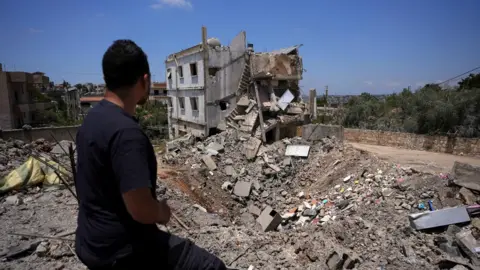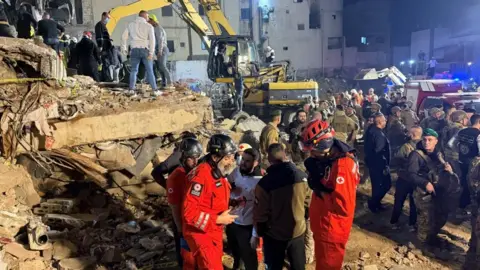
The recent collapse of two residential buildings in northern Lebanon's Tripoli has tragically resulted in 15 deaths, with reports confirming that eight individuals have been successfully rescued from the debris. Civil Defence director general Imad Khreiss reported that these two adjoining structures were home to 22 residents.
Local authorities express concern that additional individuals may still be unaccounted for, as footage from social media highlights the moment of the collapse, showing the buildings crumbling amid a cloud of dust.
This incident marks the fifth building collapse in Tripoli this winter alone and raises alarms over the deteriorating conditions of old structures in Lebanon's poorest city. Witness reports indicate a substantial crowd gathered around the site following the disaster, compounding the urgency for a reassessment of building safety in the area.
Mayor Abdel Hamid Karimeh indicated that years of neglect have left thousands of residents at risk, stating the city's dire situation exceeds the capabilities of municipal management. In response, he has submitted his resignation to the interior minister, describing Tripoli as disaster-stricken.
President Joseph Aoun announced efforts to monitor the situation and mobilize rescue teams while Prime Minister Nawaf Salam characterized the collapse as a humanitarian catastrophe and pledged governmental assistance.
This building collapse follows an evacuation of another structure two weeks prior due to signs of structural failure, showcasing the repeated failures of urban infrastructure amid Lebanon's ongoing economic crises.
The Higher Relief Authority recently alerted that over 100 buildings in Tripoli are in dire need of evacuation warnings due to their deteriorating conditions. Urban planning authorities have called attention to widespread illegal constructions dating back to the civil war era, exacerbating the vulnerability of housing across Lebanon.
In the aftermath of this tragedy, the national syndicate for property owners has accused the Lebanese state of negligence regarding its citizens’ housing safety, demanding a comprehensive evaluation of at-risk buildings nationwide.