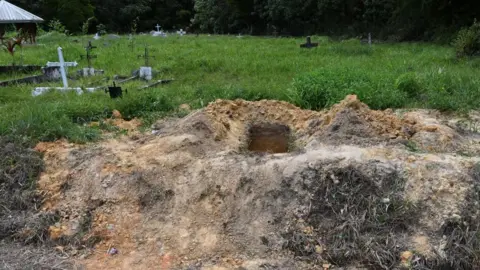
Two people have died and several are feared buried after landslides in New Zealand's North Island.
The deaths were reported at Welcome Bay, while rescue workers are still searching through rubble at a different site in a popular campground on Mount Maunganui.
There are no signs of life, authorities said, adding that they have a rough idea of how many people are missing but are waiting for an exact figure. They provided no other details except that the group includes at least one young girl.
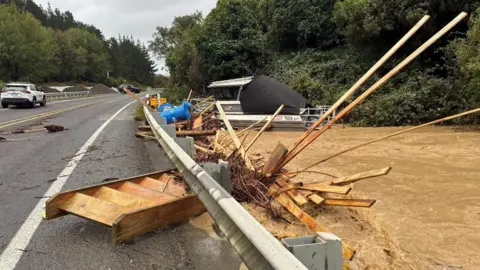
The landslides were triggered by heavy rains over the last few days, which led to flooding and power outages across the North Island. One minister said the east coast resembled a war zone.
New Zealand is heavy with grief after the profound tragedy caused by recent weather, Prime Minister Christopher Luxon said on X.
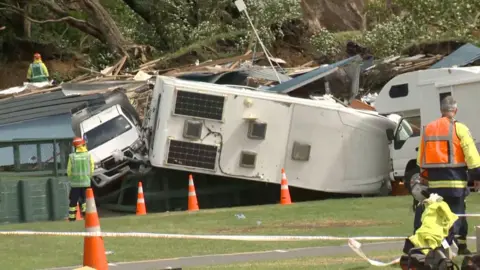
Footage from the campsite on Mount Maunganui, an extinct volcano, shows a huge slip near the base of the volcanic dome, as rescuers and sniffer dogs comb through crushed caravans and flattened tents.
Authorities said the search would continue through the night. This is a complex and high-risk environment, and our teams are working to achieve the best possible outcome while keeping everyone safe, said Megan Stiffler, the deputy national commander for the Urban Search and Rescue team.
A surf club in another part of Mount Maunganui has been evacuated following fears of more landslides.
A state of emergency has been declared in the Bay of Plenty, where Mount Maunganui sits, and various parts of the North Island, including Northland, Coromandel, Tairāwhiti, and Hauraki.
Some 8,000 people were without power as of Thursday morning, Radio New Zealand (RNZ) reported.
The wife of a man who was swept away in the Mahurangi River is holding out hope that he will survive.
Authorities have reported that December to February are typically sunnier months in New Zealand but heavy rains and storms have become increasingly frequent in recent years.
In February 2023, parts of the island were devastated by Cyclone Gabrielle, which remains the costliest cyclone to hit the Southern Hemisphere, causing damage amounting to NZ$13.5bn (US$7.9bn).