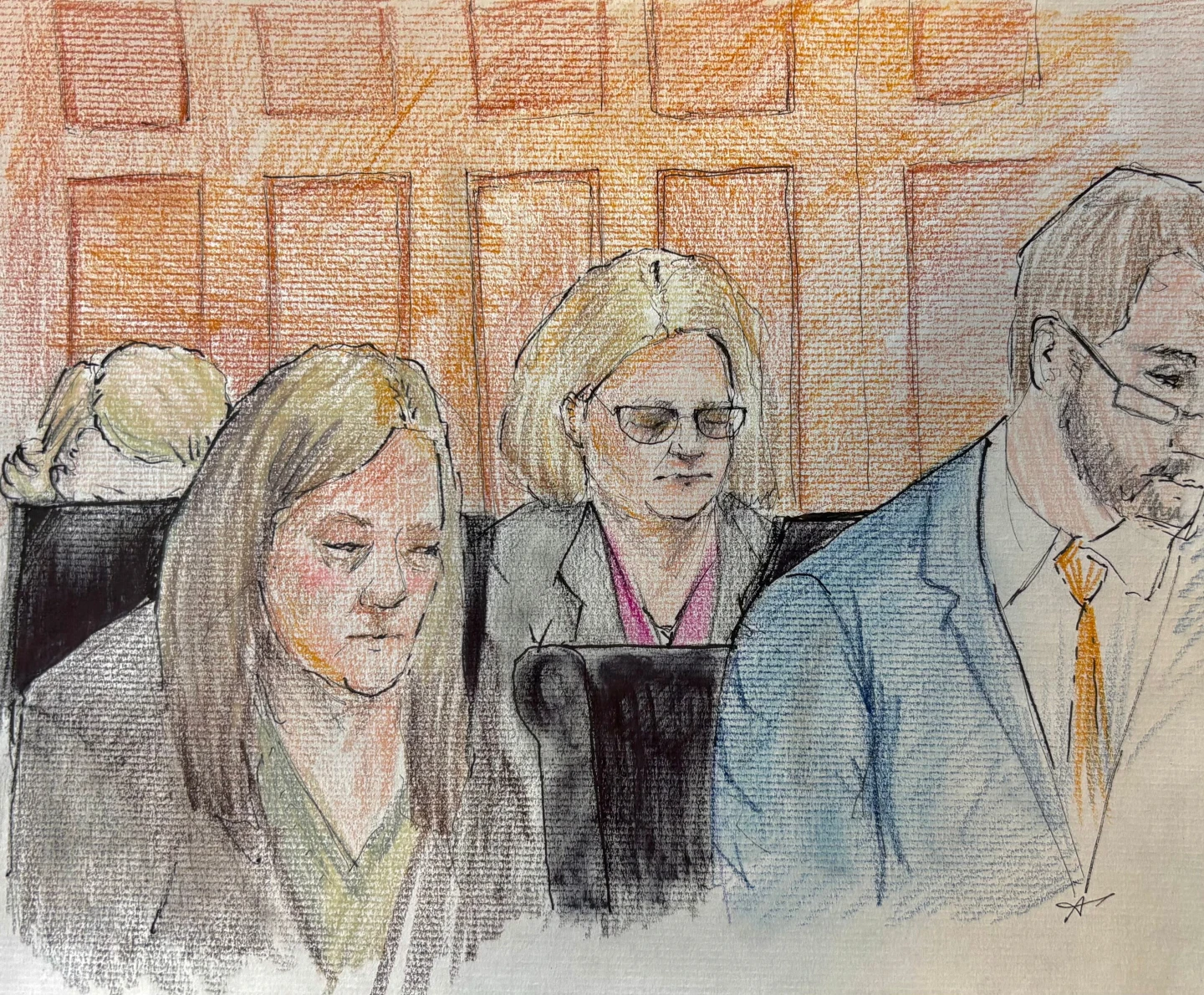
MILWAUKEE (AP) — The trial of Milwaukee County Circuit Judge Hannah Dugan, accused of obstructing federal immigration agents, entered its second day on Tuesday. Prosecutors claim Dugan made it difficult for law enforcement to do their jobs by directing agents away from where they were to capture an immigrant facing charges.
Judge Dugan is facing two serious charges — obstruction and concealment — linked to a controversial incident where she allegedly helped Eduardo Flores-Ruiz evade arrest in April. After becoming aware that federal agents were outside her courtroom, Dugan reportedly guided them toward the chief judge’s office, allowing Flores-Ruiz to escape through a private door.
This situation has sparked intense debate regarding the judicial system's relationship with the immigration policies instituted during Trump’s presidency. Supporters of Dugan criticize these charges as an attempt to intimidate judges who oppose federal immigration actions.
The polarizing case unfolds as federal agents testified about their experiences attempting to apprehend Flores-Ruiz, revealing frustrations at being misled by Dugan. FBI Agent Phillip Jackling expressed concerns about being caught in a bad position when Dugan directed agents elsewhere.
One member of the arrest team, Supervisory Officer Joseph Zuraw, recounted Dugan's brusque manner during their encounter, recalling how she directed him to leave while gesturing toward the chief judge’s chambers. As a consequence, the team had to pursue Flores-Ruiz outside the courthouse, which increased risks for both the officers and the suspect.
Dugan's defense argues that the authorities had ample opportunity to arrest Flores-Ruiz and that her actions do not warrant the extreme charges levied against her. Attorneys emphasized that she merely followed courthouse policies designed to redirect immigration agents interacting with court personnel.
The ongoing proceedings are expected to shed light on the broader implications of this case, with potential sentencing for obstruction reaching up to five years. As America grapples with increasingly strict immigration enforcement, judicial independence remains a critical issue in discussions regarding the law.