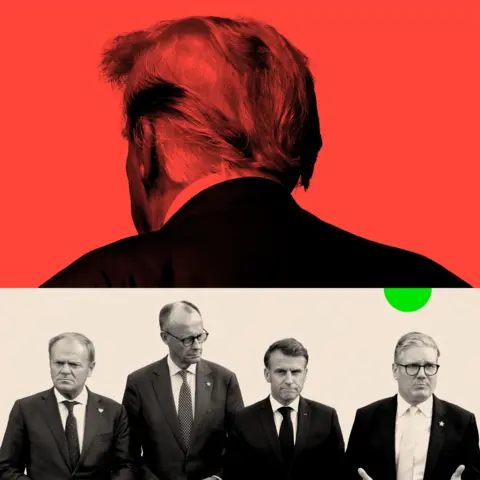
For 80 years, what bound the United States to Europe was a shared commitment to defence and a common set of values: a commitment to defend democracy, human rights and the rule of law.
That era was inaugurated in March 1947 in an 18-minute speech by President Harry Truman, in which he pledged US support to defend Europe against further expansion by the Soviet Union.
Now, the new US National Security Strategy (NSS), published in December, signals that, for the White House, that shared endeavour has ended.
Vice-President JD Vance warned America's European allies that the real threat to Europe did not come from Russia but from within - primarily from those censoring free speech and undermining European democracy. He described these forces as part of a 'leftist liberal network' and characterized it as a declaration of 'ideological war' against Europe.
The NSS confirms this perspective and posits a future where the US will no longer promote the global values that characterized American foreign policy since the end of WWII. Instead, it prioritizes the sovereignty of nations and seeks to minimize the influence of international institutions like the United Nations.
This shift raises significant questions for Europe’s future alliances. With concerns of civilizational decline and a warning that certain NATO members may become majority non-European, the document suggests a reevaluation of traditional partnerships.
Europe is left at a crossroads: continuing as a dependable ally of the US or striving for greater operational independence in a world where the US embraces a more unilateral approach to foreign policy. As European leaders contemplate this current trajectory, the message from Washington is clear: Europe must reclaim its sovereignty and adopt a stance of resistance against perceived internal threats.