WASHINGTON (AP) — A shutdown for the Department of Homeland Security appeared certain Thursday as lawmakers in the House and Senate were set to leave Washington for a 10-day break and negotiations with the White House over Democrats’ demands for new restrictions had stalled.
The White House and Democrats have traded offers in recent days as the Democrats have said they want curbs on President Donald Trump’s broad campaign of immigration enforcement. They have demanded better identification for U.S. Immigration and Customs Enforcement and other federal law enforcement officers, a new code of conduct for those agencies and more use of judicial warrants, among other requests.
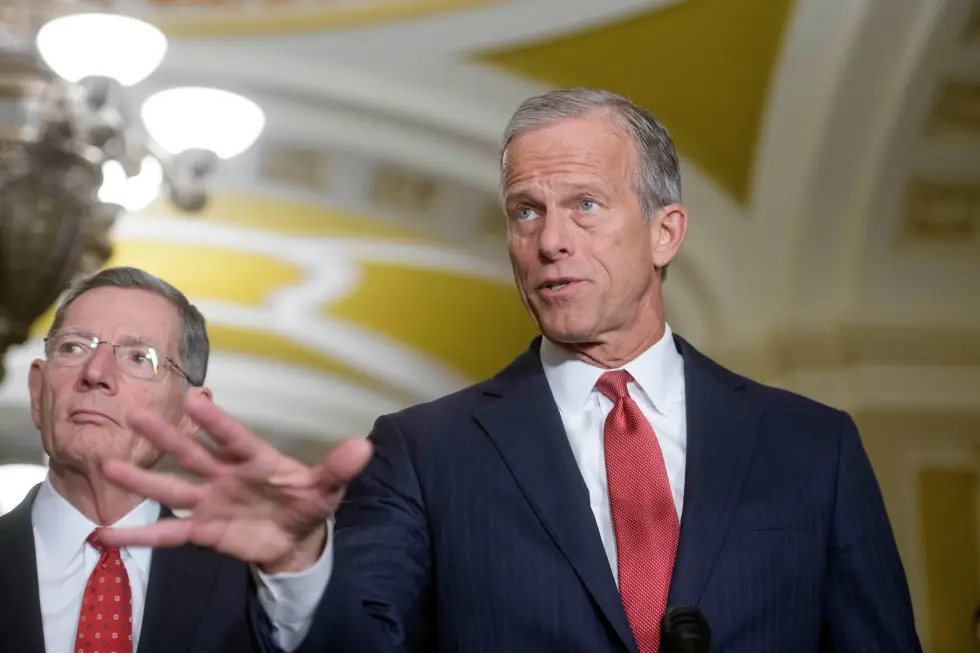
The White House sent its most recent offer late Wednesday, including what Senate Majority Leader John Thune, R-S.D., noted as concessions from the Republican administration.
However, Thune would not disclose the specifics of these concessions and acknowledged that the two sides were still a long ways toward a solution as the Senate is scheduled to vote again on DHS funding.
Democrats did not respond publically to the White House offer, and Senate Democrats' rejection of a funding bill for the department prior to their break means funding will expire Saturday without further action, following a 52-47 vote that fell short of the needed 60 votes for passage.
Lawmakers in both chambers have been put on notice to return to Washington if a deal to end the expected shutdown is achieved. For the moment, Democrats maintain that “real changes” are necessary before they will back DHS funding.
Chuck Schumer, Senate Democratic leader, stated that Americans seek accountability and an end to the chaos, urging the White House and congressional Republicans to heed their demands.
He recognized that the administration’s announcement of an end to the immigration crackdown in Minnesota—which caused thousands of arrests and the fatalities of two protesters—was not sufficient.
Democrats also demand new restrictions on ICE and federal law enforcement following the tragic incident where ICU nurse Alex Pretti was killed by a Border Patrol officer in January. Thune suggested that negotiations are mired particularly over the Democratic demands concerning judicial warrants.
“The issue of warrants is going to be very hard for the White House or for Republicans,” said Thune. “But I think there are a lot of other areas where there has been give, and progress.”
Schumer and House Democratic leader Hakeem Jeffries also demand that DHS officers should not be authorized to enter private properties without a judicial warrant, and adjustments to warrant procedures and standards should be implemented.
Currently, most immigration arrests occur under administrative warrants that do not permit officers to forcibly enter properties without consent. However, an internal ICE memo recently obtained indicates that ICE officers may use force based on only a narrower administrative warrant.
Congress seeks to renegotiate the DHS spending bill after Trump agreed to a Democratic request to extract it from a previous larger spending measure that was enacted last week, which extended funding only through Friday.
Democrats insist that immigration officers remove their masks to identify themselves, cooperate more closely with local authorities, implement a stricter use-of-force policy, and prohibit the monitoring of protesters with body-worn cameras.
Republicans largely oppose many demands articulated by the Democrats, while Trump remains largely silent on negotiations.
The impact of a DHS shutdown is anticipated to be minimal in the short term regarding immigration enforcement, but agencies including the Transportation Security Administration, FEMA, Secret Service, and Coast Guard may face more significant challenges over time. FEMA assured that while emergency response activities can continue during a shutdown, catastrophic disaster events may severely stress the agency's resources moving forward.