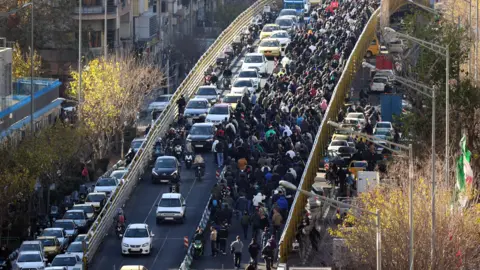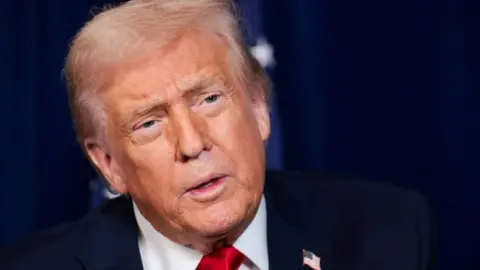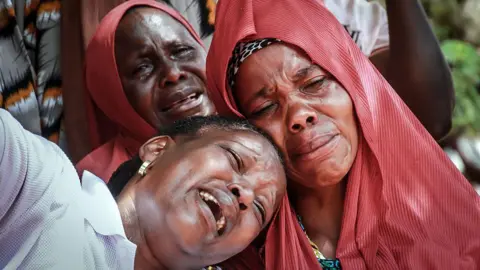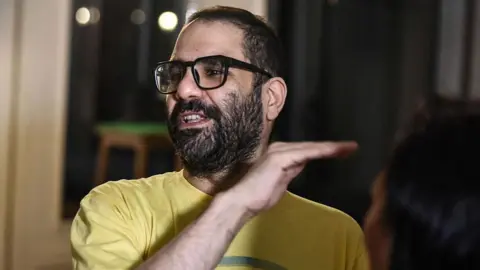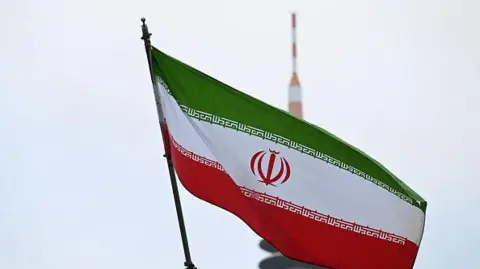
Two people are reported to have been killed during growing unrest in Iran on the fifth day of protests over the soaring cost of living.
Both the semi-official Fars news agency and human rights group, Hengaw, reported deaths during clashes between protesters and security forces in the city of Lordegan, in south-western Iran.
Videos circulating on social media on Thursday showed scenes of violence, including cars set ablaze amid ongoing confrontations.
The protests have seen demonstrators calling for an end to the rule of the country’s supreme leader, with some voices advocating for a return to monarchy.
These protests erupted following a significant collapse of the Iranian currency, triggering a wave of dissent across several cities.
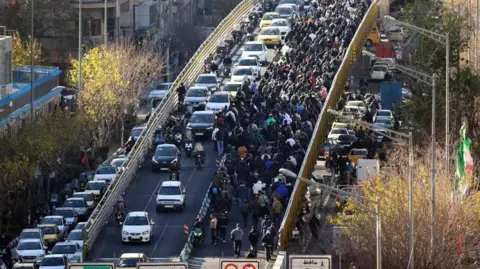
In verified footage shared by BBC Persian, protests were seen not only in Lordegan but also in Tehran and Marvdasht, with escalating tensions emerging during confrontations.
Fars reported the fatalities in Lordegan, indicating that the individuals were killed during clashes, though it remained unclear if they were protesters or security personnel. Human rights group Hengaw identified the deceased as Ahmad Jalil and Sajjad Valamanesh, both claimed to be protesters.
Unconfirmed reports also suggested that a member of Iran’s Revolutionary Guards was killed in Kudasht during protests on Wednesday night, bringing further tensions. Protesters assert he was one of their number, allegedly shot by security forces.
State media reported that at least 13 police officers sustained injuries from stone-throwing incidents during these clashes.
In an attempt to mitigate the unrest, authorities declared a bank holiday, closing schools, universities, and public institutions across the nation, ostensibly to conserve energy due to cold weather, but many viewed it as a means to suppress protests.
The protests initially began amongst shopkeepers in Tehran, who were frustrated by a dramatic depreciation of the Iranian currency against the dollar.
As protests spread through various cities, university students joined the demonstrations, openly criticizing the clerical regime.
While the current protests are significant, they have not yet reached the same intensity as the mass protests that followed the death of Mahsa Amini in custody last year. To prevent further escalation, authorities have ramped up security in the initial protest hotspots in Tehran.
President Masoud Pezeshkian has expressed the government’s willingness to listen to the protesters’ legitimate demands. Conversely, the prosecutor general has warned that any attempts at destabilization would elicit a strong backlash from the authorities.