The revolution will not be televised, but it might have webbed feet and bulging eyes.
It also might have a unicorn's horn or a chicken's feathers.
As protests against the Trump administration continue in US cities, demonstrators are adopting the energy of a community costume parade or block party. They've taught salsa lessons, handed out snacks, and ridden unicycles as armed law enforcement look on.
Mixing humor and politics—known as tactical frivolity—has become a defining feature of American protest during the Trump era, embraced by both left and right factions.
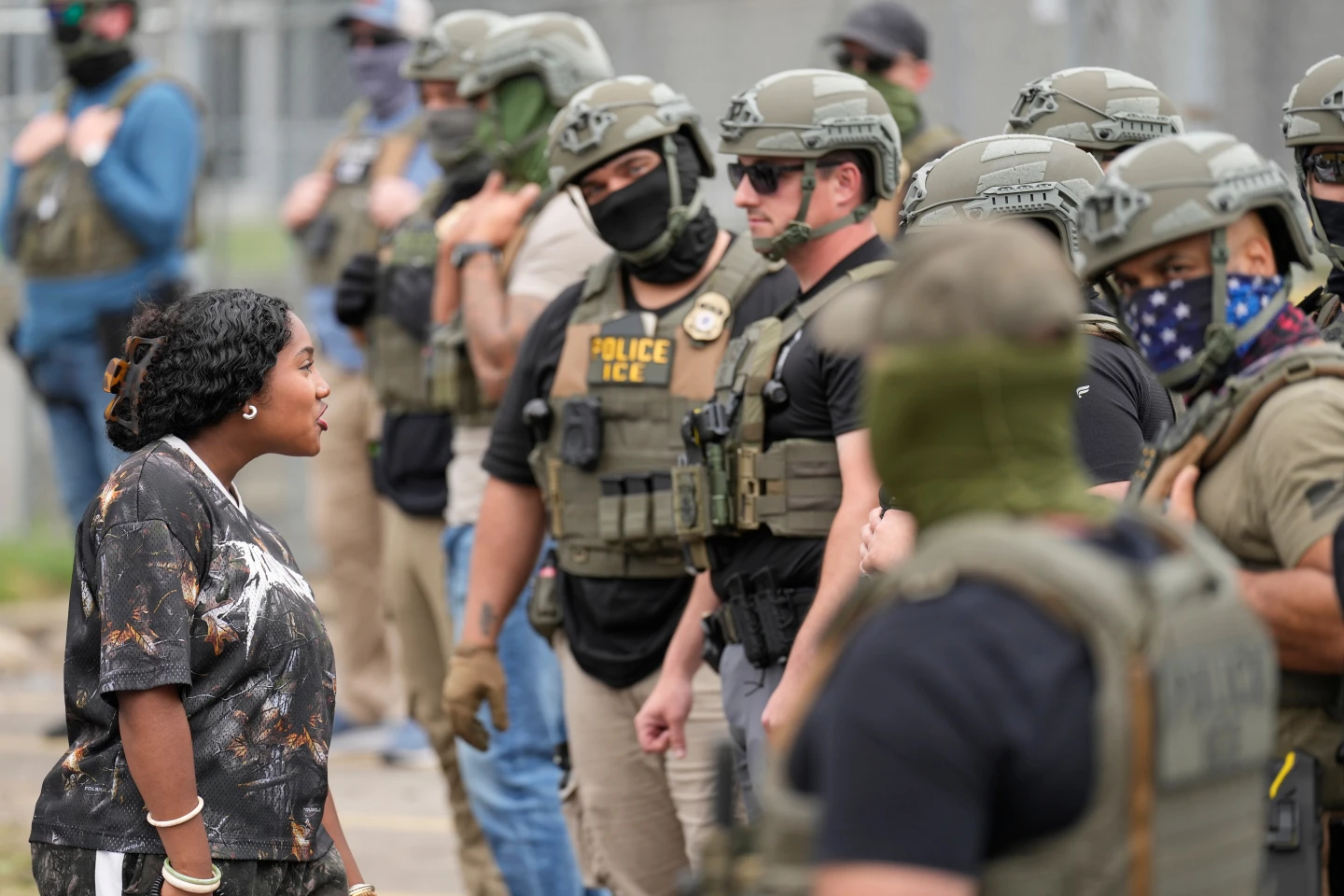
One symbol has emerged as particularly salient: the frog. The phenomenon began with video footage of a man in a frog suit confronting immigration enforcement agents in Portland, Oregon, which went viral. This moment has since spread to protests nationwide.
LM Bogad, a performance art expert at the University of California, Davis, notes that there's a lot going on with that little inflatable frog.
From Pepe to Portland
Discussing protests and frogs inevitably leads to the figure of Pepe, a cartoon character that gained traction among far-right groups during Donald Trump’s 2016 campaign.
Initially launched as a comical character, Pepe quickly became associated with various political sentiments by Trump's supporters and darker contexts related to racism and white supremacy.
But Pepe, originally envisioned by artist Matt Furie as a benign character, entered the cultural lexicon in ways Furie did not anticipate. As internet users appropriated Pepe, the creator attempted to reclaim his character, expressing discontent with the misappropriation in the 2020 documentary Feels Good Man.
The character's greater journey shows how symbols can evolve, highlighting the irrepressible nature of imagery in political discourse.
However, until recently, the frog represented far-right sentiment; this notion significantly changed on October 2, when Seth Todd, donning an inflatable frog costume, faced an immigration officer in Portland.
Controlling the Optics
The juxtaposition of humorous characters like Pepe and the Portland frog illustrates a complex interplay of humor and political meaning during protests. Tactical frivolity—making serious political statements wrapped in absurdity—is a compelling way to call attention to underlying political issues while presenting a palatable image to the public.
Experts argue that such presentations can diffuse tense situations, offering defense against potential mischaracterizations of protestors as violent, embodying a critical need for creative responses to government control.
Organizations have sprung up around the newfound symbolism of frogs and absurdity in protests, including Operation Inflation, which collects inflatable costumes for protestors, drawing parallels to civil rights protests from a bygone era.
As the frog costume proliferates across protests in cities both big and small, the message is clear: humor can be an effective, subversive tool for political expression, challenging authority while fostering community and creativity.