Welcome to the new era of 'national rise'!
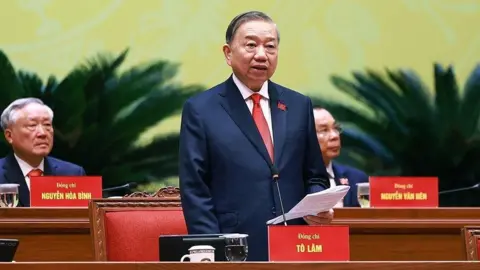
Vietnam's most powerful figure, Communist Party General Secretary To Lam, has returned to his post at a pivotal party congress, where he faces expectations to revitalize the nation’s economy. His re-election positions him to spearhead ambitious reforms aimed at transforming the Vietnamese economic landscape over the next five years.
During this week’s congress, which concluded earlier than planned, To Lam was reaffirmed as the party chief, a role he assumed last year following the death of his predecessor, Nguyen Phu Trong. As the head of the Ministry of Public Security prior to his promotion, he led a sweeping anti-corruption initiative. Now, he aims to shift focus towards economic growth and reform.
Central to his strategy is a dramatic restructuring of the bureaucracy, proposing a reduction in the number of provinces from 63 to 34 and laying off over 100,000 government employees. Furthermore, in a groundbreaking move, Resolution 68 was introduced last year to elevate the importance of the private sector within Vietnam’s economy.
To Lam's economic vision includes setting ambitious targets: striving for double-digit annual growth and aiming to double the number of private businesses by 2030. His objective is to break Vietnam out of the so-called middle income trap by its centennial of independence from French colonial rule in 2045.
To accomplish this, To Lam has identified the need to support large domestic companies, dubbed leading cranes, that can compete on the global stage. Despite the success of some Vietnamese firms, such as the tech enterprise FPT, the predominance of small companies presents challenges to realizing his vision.
Simultaneously, Vietnam's economy remains heavily influenced by state-owned enterprises, comprising a significant share of GDP and enjoying preferential advantages. To Lam's attempts to restructure the economy could potentially lead to new forms of economic inequality if not managed carefully.
The landscape of Vietnam's economy is also complicated by international relations, particularly with the potential impacts of US tariffs under the Trump administration. With a growing dependence on the US market, the country's diplomatic strategy will be tested.
As Vietnam embarks on this transformation, To Lam’s leadership will be closely scrutinized: Can he navigate the complexities of economic reform while maintaining stability within the party amid political rivalry and global uncertainties?