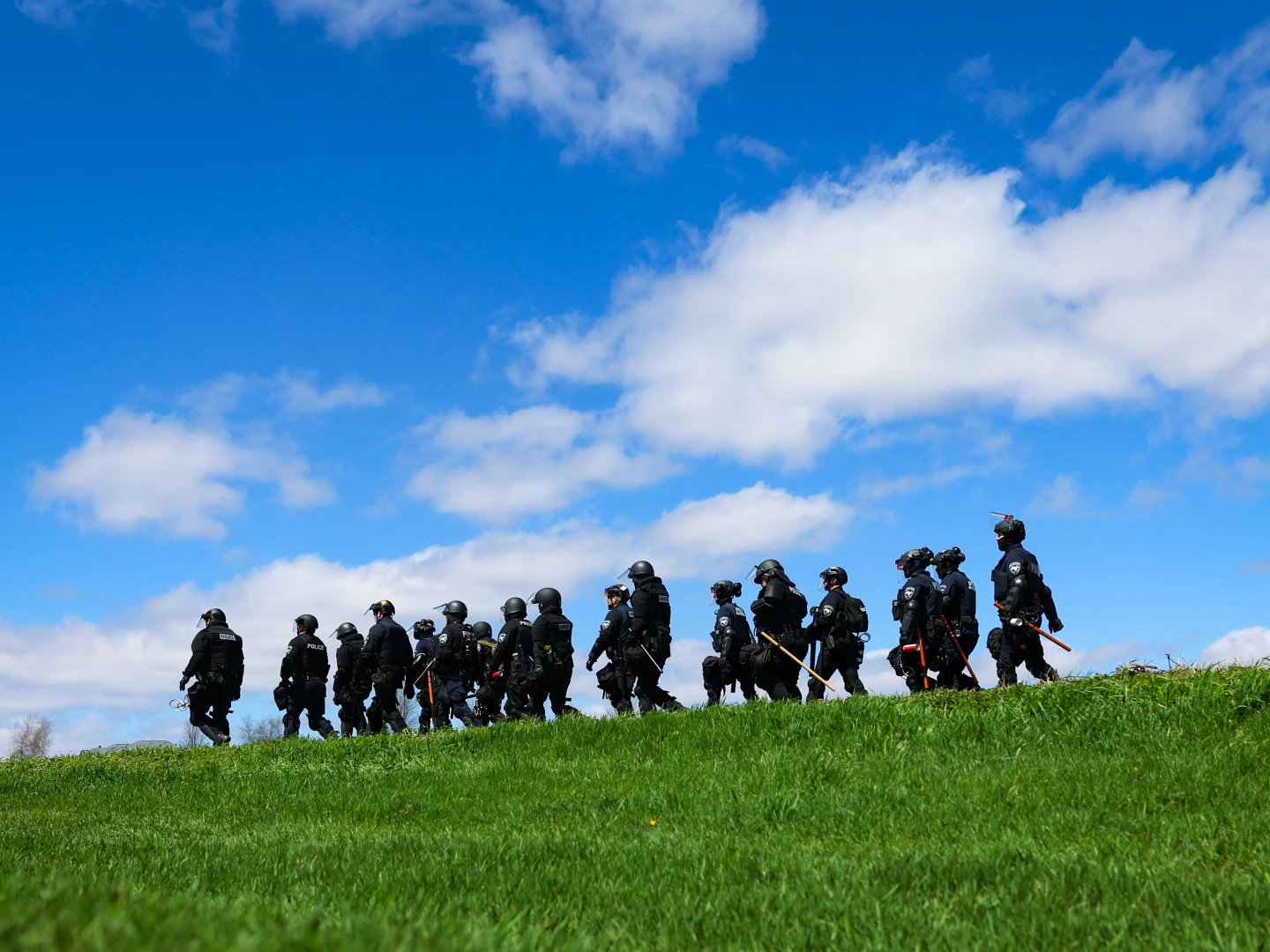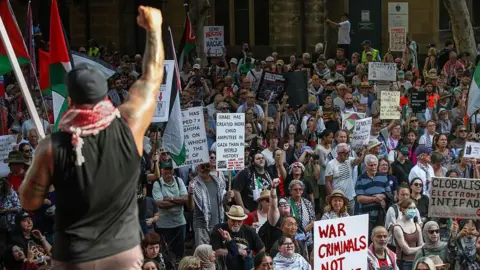
On Monday night, demonstrations against Israeli President Isaac Herzog's visit to Australia escalated into violent clashes between police and protesters in Sydney. Eyewitnesses reported police charging at protesters, resulting in injuries, including to at least one state parliament member. Authorities arrested 27 individuals, nine of whom were later charged, while ten police officers reported being assaulted.
In defense of their actions, NSW Police Commissioner Mal Lanyon stated that officers showed 'remarkable restraint' while asserting that they 'did what they needed to do.' The protests were organized amidst heightened tensions following an antisemitic attack earlier in December, which prompted the government to invite Herzog to help the Jewish community heal despite objections from pro-Palestinian groups.
Prior to the rally, demonstrators attempted to overturn police-imposed restrictions limiting their ability to march, but their legal bid failed shortly before the event began. As tensions mounted, protesters began chanting for the right to march, prompting police to respond with pepper spray, causing panic and confusion.
Protest leaders characterized the police's response as excessive and unnecessary, highlighting that the violence could have been avoided if the government had allowed the protesters to march as planned. Activists and members of the public criticized the police's heavy-handed tactics, while Premier Chris Minns defended the police's difficult position, urging spectators not to judge the situation based on brief video clips of the incidents.
Another protest is expected to take place outside a Sydney police station, with calls for charges against arrested protesters to be dropped and investigations into police use of force.
The protests drew attention to the broader context of Herzog's visit, which was condemned by groups citing a UN report that accused him of inciting genocide. The situation remains tense as calls for justice and accountability continue amidst ongoing debates about the rights to protest and police powers.