In brief
In November 2026, Abu Dhabi’s Department of Energy signed a cooperative framework with H2G Green Ltd, its subsidiary GasHubUnited, MUZN Energy and CloudEnergi to evaluate liquefied natural gas solutions for industrial and commercial sites beyond current distribution networks. The partnership could unlock up to AED 1 billion in investment, supporting the emirate’s energy security and sustainability goals while boosting industrial growth.
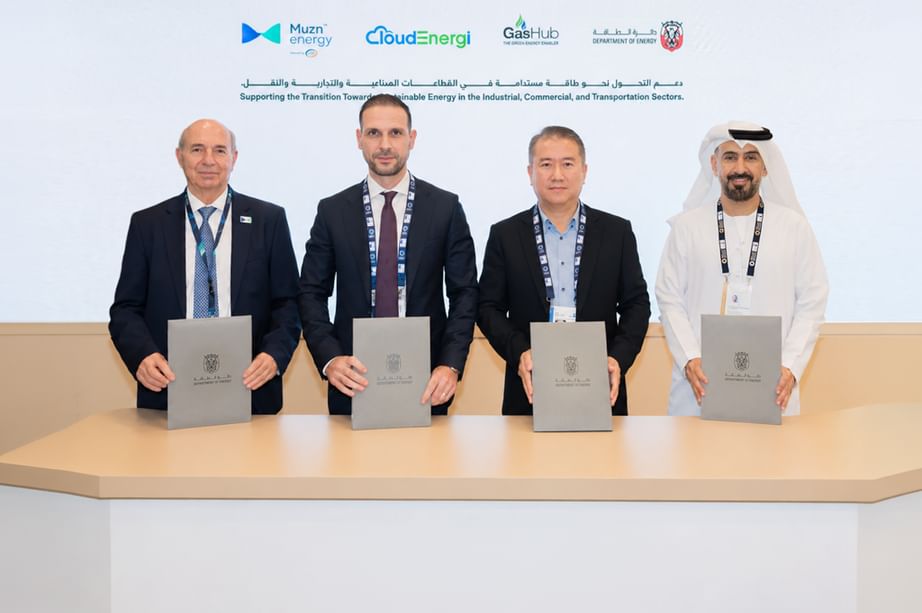
At the Abu Dhabi International Petroleum Exhibition and Conference (ADIPEC 2026), the Abu Dhabi Department of Energy (DoE) announced the signing of a cooperation agreement with H2G Green Ltd and its subsidiary GasHubUnited Utility Private Ltd, MUZN Energy – a subsidiary of SERGAS Group – and Cloud Energi Gas Company. The framework, unveiled on 5 November 2026, sets out to explore the feasibility of liquefied natural gas (LNG) supply for industrial and commercial facilities located beyond the reach of existing gas distribution networks.
The DoE said the agreement will “assess opportunities to utilise LNG solutions to supply industrial and commercial facilities and locations not connected to existing gas distribution networks.” By providing a flexible and reliable fuel source, the partnership aims to boost business continuity for facilities that would otherwise face supply constraints.
According to the WAM release, the initiative aligns with Abu Dhabi’s broader strategy to diversify energy supply, enhance the reliability and efficiency of its energy system and support economic and industrial growth. The agreement emphasizes the emirate’s commitment to an integrated, secure and reliable energy system capable of sustaining its industrial and commercial development.
DoE officials highlighted that LNG could transition facilities from higher‑emission fuels to lower‑emission alternatives, in line with the emirate’s sustainability objectives. H2G Green and its partners bring a practical innovation element to the partnership, creating opportunities for private‑sector collaboration within an enabling regulatory environment.
One of the guiding aims of the framework is to identify solutions that support facilities located beyond the coverage of existing gas distribution networks. This focus on “beyond the network” sites reflects a desire to broaden service footprints and reduce the risk of supply outages for critical industrial and commercial infrastructure in the region.
The agreement also references potential cooperation with the maritime sector, indicating a willingness to evaluate LNG solutions that could link industry hubs with shipping routes or port facilities, further expanding the scope of the initiative.
WAM reports that the cooperatively developed LNG infrastructure could unlock potential investments of up to AED 1 billion. This figure encompasses local production, transportation, and distribution components designed to meet the demands of Abu Dhabi’s industrial and commercial sectors.
“By integrating private‑sector collaboration, an enabling regulatory environment for investment and innovation, and practical innovation, the convergence of DoE, H2G Green, MUZN Energy, and CloudEnergi seeks to diversify energy supply, improve efficiency, and respond to the evolving needs of the emirate’s vital sectors,” the WAM release states.
From a civic‑stake perspective, the agreement prioritizes energy security for a range of sectors, from manufacturing to utility services. Reliable natural gas supply is essential for continuous operation of plants that drive the emirate’s economy, particularly in the industrial and commercial corridors that benefit from proximity to the Gulf’s energy hubs.
Stakeholders in the industrial community may see tangible effects in lower fuel costs and enhanced contingency planning. By diversifying supply channels, firms gain a buffer against supply disruptions that historically isolated certain facilities from the pipeline network.
For the environmental accountability dimension, the partnership’s emphasis on LNG as a pathway to lower‑emission fuels presents a measurable step towards Abu Dhabi’s sustainability targets. Transitioning from diesel or other heavier fuels to natural gas can reduce carbon intensity across multiple sectors, reinforcing the emirate’s public commitments made in climate accords and national policies.
In the context of public accountability, the DoE’s public announcement of the agreement underlines transparency regarding future diversification efforts and the financial sizing of the project. The declared potential of AED 1 billion signals a concrete budgetary scope that will likely impact approvals, regulatory reviews, and public planning documents.
To ensure that local communities and industry participants can track the development, the DoE and its partners have indicated that further feasibility studies will be conducted following the initial agreement. These studies will likely involve technical assessments, cost‑benefit analyses, and environmental impact evaluations before any significant capital is deployed.
The collaboration also reflects the emirate’s policy to empower private‑sector actors in infrastructure development. By rotating expertise across the four entities, the partnership aims to harness H2G Green’s LNG technology credentials, MUZN Energy’s regional experience, CloudEnergi’s gas distribution capabilities, and the DoE’s regulatory oversight.
Industry experts in the region have welcomed the initiative as a precedent for cross‑sector partnerships that address long‑standing supply gaps. Observers note that integrating LNG solutions within the national grid would increase the resilience of Abu Dhabi’s energy portfolio, particularly in light of the global shift toward cleaner fuels.
Looking forward, the partnership’s success will hinge on several factors: securing appropriate licensing and permits, aligning investment timelines, and ensuring that commercial agreements are structured to attract additional private‑sector capital beyond the upfront AED 1 billion potential.
In light of the above, this partnership marks a significant step toward addressing energy security, industrial continuity, and environmental stewardship in Abu Dhabi. As the emirate moves to unlock larger volumes of LNG infrastructure, citizens, businesses, and the broader public will likely witness increased reliability in their energy supply and a tangible move toward a cleaner energy landscape.